
2026 BEI National Conference - registration is open. Secure your spot today.

Business Exit Planning in Texas for Advisors

In Texas, business exit planning means helping an owner build a company that can change hands on their terms, whether that happens in two years or ten. For advisors, three things are in play at once:

  1. Growing the value of the business
  2. Working within a state tax structure that has no personal income tax but does charge a franchise tax
  3. Reading a market that looks very different from one region to the next

An owner in Houston deals with different buyers, labor costs, and valuation pressure than one in Austin or San Antonio, and those differences often decide both the timing and the outcome of an exit. Advisors who want a consistent process usually start with BEI’s business and exit planning programs, and many go on to formalize that expertise with the CExP™ certification.

Key Takeaways for Texas Advisors

  • Texas has no personal income tax, but the state’s franchise tax (the “margin” tax) applies to most companies. For the 2026 report year, a business owes nothing if its annualized revenue is $2.65 million or less, and the Comptroller estimates about nine in ten Texas entities fall below that line.
  • Texas has roughly 3.5 million small businesses, about 99.8% of all businesses in the state. Nationally, more than half of business owners are now 55 or older, according to U.S. Census figures, and most have no formal exit plan, so a large share of Texas owners will be heading toward a transition over the next decade.
  • Most successful Texas exits start three to five years before the owner leaves. That head start is what makes it possible to raise value, build a management team, and plan around taxes instead of reacting to them.
  • BEI’s exit planning membership and hands-on exit planning training give advisors the frameworks, software, and support to deliver plans consistently and grow the practice.
  • Ongoing continuing education keeps the CExP™ credential current as tax rules and deal structures change.

What Is a Texas Business Exit Plan?

A Texas business exit plan pulls several kinds of advice into one plan built around a single owner’s goals. In practice, that usually means working through:

  • Business valuation and steps to increase value
  • Financial independence and income after the sale
  • Ownership transition and succession design
  • Federal and Texas tax planning
  • Personal timing, lifestyle, and legacy goals

Keeping the owner’s goals at the center does one important job: it stops the plan from turning into a stack of disconnected recommendations. Many advisors also pull labor and wage figures from the Texas Workforce Commission to check workforce availability and local conditions that affect both timing and value.

Common Exit Strategies for Texas Businesses

Advisors in Texas tend to look at four main ways an owner can leave. Each one trades off differently on cash at closing, how much control the owner keeps, and how the deal gets taxed. The right fit depends on the owner’s goals and on the business itself.

Exit Strategy Liquidity at Close Owner Control After Key Tax or Structural Consideration Often Best Fit For
Third-party sale (strategic or financial buyer) High Low or none Capital-gains treatment; asset vs. stock structure Owners seeking maximum value and a clean exit
Family or internal succession Low to moderate, often staged Moderate to high during transition Gift and estate coordination; financing the transfer Owners prioritizing legacy and continuity
Employee Stock Ownership Plan (ESOP) Moderate Fades over time Tax-advantaged but complex to set up and run Owners wanting liquidity plus employee ownership
Management buyout (MBO) Low to moderate Low after transition Buyer financing; seller notes are common Owners with a capable, committed management team

Choosing the Right Exit Route in Texas

The right route depends on what the owner wants most: the highest possible price, keeping the business in the family, rewarding employees, or hitting a specific exit date. Texas tax rules then shape how that route gets carried out. Because the state has no personal income tax, the tax outcome of a sale is driven almost entirely by federal rules rather than state ones. That puts extra weight on structure, such as an asset sale versus a stock sale, whether the owner spreads payments out through an installment sale, and how the timing falls across tax years.

In a high-income-tax state, state tax would pull on those decisions too. In Texas, the federal analysis usually settles them, which is one reason owners here benefit from modeling the after-tax result early rather than at the closing table.

LEARN HOW BEI SUPPORTS PROFESSIONAL ADVISORS

1. Texas Tax Environment

Texas is one of the few states with no personal income tax, which can leave more in an owner’s pocket at sale than a higher-tax state would. The trade-off is the franchise tax, sometimes called the margin tax, which applies to most corporations, LLCs, and partnerships. Here are the numbers that matter for the 2026 report year, from the Texas Comptroller of Public Accounts:

  • The no-tax-due threshold is $2.65 million in annualized revenue, up from $2.47 million in 2024 and 2025. The Comptroller estimates that about nine in ten Texas entities come in below it and owe no franchise tax.
  • Rates run 0.375% for retail and wholesale businesses and 0.75% for most others. Companies under $20 million in revenue can use a simplified EZ rate of 0.331%.
  • A business that owes nothing still has to file a Public Information Report. And an out-of-state company can pick up a Texas filing obligation once its Texas sales pass $500,000, even with no physical presence here.

These numbers shape the timing of a deal, the entity structure, and what an owner keeps after tax, so advisors model them next to federal capital gains and income tax rather than in isolation.

2. Economic and Market Conditions

Texas has the second-largest economy of any state, close to $2.7 trillion, large enough to rank among the ten biggest economies in the world if it stood on its own. What matters for exit planning is how varied that economy is, because exits look different from one industry to the next. Texas leads the country in energy, producing more crude oil and natural gas than any other state and generating the most wind power.

It also anchors major clusters well beyond oil and gas: technology around Austin and Dallas, healthcare and life sciences around the Texas Medical Center in Houston (the largest medical complex in the world), aerospace, heavy manufacturing, and a trade sector that makes Texas the largest exporting state in the country.

A software company in Austin, an oilfield services firm in Midland, and a family manufacturer in Dallas-Fort Worth each draw different buyers and command different multiples, so the strategy has to fit the sector. Advisors can check current statewide and regional figures from the Texas Comptroller’s economic data and academic work from groups like the University of Texas at Austin’s Department of Economics before settling on valuation assumptions.

The buyer side is a real advantage here. Texas is home to more Fortune 500 headquarters than any other state and has drawn a steady stream of corporate relocations, from Tesla and Chevron to Caterpillar and CBRE. That concentration of large companies, together with active private-equity interest in the state, gives owners a deep pool of strategic and financial buyers when the time comes to sell. For advisors, it also means valuation and deal terms tend to move with a competitive market rather than a thin one.

Demand and pricing still swing by region, though. Buyer activity in Dallas-Fort Worth or Houston can look nothing like a smaller market a few hours away, and workforce availability varies just as much. With roughly 3.5 million small businesses (about 99.8% of all Texas businesses, according to the U.S. Small Business Administration’s Office of Advocacy), there is no single Texas market, so local knowledge is part of the job.

3. Estate and Succession Planning Considerations

Texas has no state estate tax and no inheritance tax, which takes one layer of complexity off the table. Succession still needs attention, though, in a few areas:

  • Ownership-transfer structure
  • Governance and control
  • Asset protection
  • Long-term wealth under federal estate-tax limits

Downtown Houston, Texas (a major financial center)

How Do Advisors Build a Business Exit Plan in Texas?

Most advisors follow a sequence like this one.

Step 1: Define Owner Objectives

Start with what the owner actually wants: how much cash they need, when they want out, whether they plan to stay involved, and what legacy matters to them.

Step 2: Establish Business Value

A valuation shows the gap between what the business is worth now and what the owner needs it to be worth at exit. That gap points to where better operations, stronger margins, and lower risk can move the number.

Step 3: Improve Transferability

Buyers pay more for a business that runs without its owner. Building leadership depth, documenting how the company works, and tightening governance all raise buyer confidence and the quality of the eventual deal.

Step 4: Address Tax Exposure Early

Bring in tax help early to plan around franchise tax, federal income and capital gains, and the timing and structure of the deal.

Step 5: Coordinate the Advisory Team

A full Texas exit team usually includes an exit planning professional, a CPA or tax advisor, a business attorney, and a financial planner. Advisors who hold the CExP™ designation and keep it current tend to lead this group, because they can point to a recognized process the whole team can follow.

Advisor-led Exit Planning Execution Support

When Should Texas Business Owners Start Exit Planning?

The short answer: three to five years before they want to leave. That window gives an owner and their advisors enough room to:

  • Grow EBITDA and enterprise value
  • Line up leadership and ownership succession
  • Handle taxes before they become urgent
  • Keep options open on timing and deal structure

Owners who treat exit planning as part of running the business, not a one-time event at the end, tend to build stronger relationships with their advisors and walk away with more when they finally sell.

About BEI

For more than thirty years, Business Enterprise Institute (BEI) has trained advisors to help business owners build value and exit well, including the many advisors who serve owners across Texas. Estate planning attorney John Brown founded BEI in 1991 and built one of the first structured approaches to exit planning, which grew into the BEI Seven Step Exit Planning Process™. Advisors working with owners in Houston, Dallas, Austin, San Antonio, and smaller Texas markets use BEI’s two tracks: Owner-Based Planning to grow company value, and Exit Planning to guide the transition itself.

FAQs About Business Exit Planning in Texas

What is the difference between exit planning and succession planning?

Succession planning answers who will run or own the business next. Exit planning is wider. It also covers the owner’s financial independence, the value and transferability of the company, the tax and deal structure, and the timing of the owner’s departure. Succession is one part of a complete exit plan.

Can a Texas business owner do exit planning without selling the company?

Yes. Exit planning is really about building a business that could change hands on the owner’s terms, whether or not a sale ever happens. Most of the work, such as raising value, reducing the company’s dependence on the owner, and strengthening the management team, pays off even if the owner stays for years.

Which professionals provide business exit planning in Texas?

Exit planning is usually led by a financial advisor, CPA, attorney, or consultant trained in a structured process, and many hold the CExP™ designation. Rather than replacing the specialists an owner already uses, these advisors coordinate them around one plan.

Is business exit planning only for large Texas companies?

No. The large majority of Texas businesses are small, and owners of small and mid-sized companies often have the most at stake, since so much of their personal wealth sits inside the business. Planning early helps protect that value long before a transition.


How Advisors Are Confidently Adding Exit Planning to Their Practice

Advisors who move beyond transactional work and begin guiding business owners through long-term transition planning quickly become the advisors clients rely on most. Exit Planning doesn’t replace your core services, it elevates them. It deepens relationships, creates new revenue opportunities, and positions you as the strategic partner owners trust with their life’s work.

If you’ve considered Exit Planning but weren’t sure how to begin, you’re not alone, many advisors feel that way until they see how simple it can be with the right structure.

With the right tools and process, Exit Planning becomes a seamless extension of what you already do every day.


Why Advisors Should Consider Exit Planning

Many advisors hear the term “Exit Planning” and imagine a complicated, time-intensive process. In reality, Exit Planning is simply a structured way to help owners plan for a successful future one that aligns their personal, financial, and business goals.

Exit Planning Advisors:

  • Guide owners through a clear, repeatable process
  • Identify risks and opportunities early
  • Strengthen the value of the business
  • Ensure owners are personally and financially ready for transition
  • Support implementation every step of the way

Whether you’re a CPA, financial advisor, insurance professional, banker, or consultant, Exit Planning fits naturally into your existing services. You don’t need to reinvent your practice, you just need a framework that connects what you’re already doing into one coordinated plan owners understand and appreciate.


Small Adjustments That Drive Big Results

Exit Planning isn’t a stand-alone specialty you learn from scratch. It’s an enhanced, more strategic version of work you already deliver. Here’s how it connects directly to your strengths:

Minimizing Taxes

Tax planning shapes the outcome of nearly every exit. Advisors with tax expertise can help owners evaluate strategies years in advance—often saving them substantial money.

Clarifying Financial Needs and Gaps

Owners routinely misjudge the value of their business and what they’ll need to maintain their lifestyle after transitioning. Financial advisors help them set realistic goals, evaluate resources, and close the gap.

Developing Capable Management

Whether an owner sells internally, externally, or keeps the business in the family, strong management is essential. Consultants can support hiring, development, and incentive strategies that protect continuity and build value.

Planning for the Unexpected

Unexpected life events can jeopardize even the strongest companies. Insurance advisors help strengthen Buy-Sell Agreements and continuity plans that safeguard the business and the owner’s family.

These are services you may already provide, Exit Planning simply brings them together with a structured path and purpose.


How Exit Planning Elevates Your Practice

Adding Exit Planning often unlocks meaningful benefits for advisors, including:

1. Natural Revenue Growth

Exit Planning reveals additional planning needs, tax, legal, financial, or operational that drive new engagements within your core services.

2. Clear Differentiation

Most advisors engage too late in the transition process. Advisors who proactively guide owners early stand out immediately.

3. Better Referral Flow

Exit Planning requires collaboration. When other professionals see your process in action, they confidently refer clients who need comprehensive planning.

4. Stronger, More Enduring Client Relationships

Exit Planning is personal. It opens deeper conversations about goals, family, finances, and legacy transforming your role from service provider to trusted partner.

Advisors who integrate Exit Planning consistently report that clients stay longer, refer more often, and view them as the central figure in their advisory team.


Start Exit Planning With Clarity — Not Complexity

You don’t need to become an exit expert overnight. What you need is:

  • A proven process
  • Clear tools
  • Simple assessments
  • Guidance on how to introduce Exit Planning to clients
  • Support implementing your first plans confidently

We provide all of that so you can get started quickly, offer value immediately, and deepen client trust without disrupting your existing practice.


What Are You Waiting For? Take the First Step Today

If you’re ready to explore Exit Planning and discover how it can strengthen your practice and your client relationships, we’re here to help you get started.

Book a demo when you’re ready, and we’ll show you how to integrate Exit Planning into your practice simply, confidently, and effectively so you become the advisor your clients trust with their most important decisions.

Maximize Business Value with Owner Based Planning

In today’s dynamic business environment, strategic planning is more critical than ever. Owner Based Planning provides a robust framework that guides clients toward sustainable success. This approach focuses not only on immediate gains but also on building a resilient foundation that can withstand future uncertainties. By prioritizing value creation, risk mitigation, and continuity planning, Owner Based Planning empowers advisors to offer a comprehensive service that addresses the unique needs of business owners.

Owner Based Planning offers a structured process that enables advisors to deeply understand their clients’ objectives and craft personalized recommendations. It positions advisors as trusted partners, facilitating growth and stability for businesses at every stage of development.

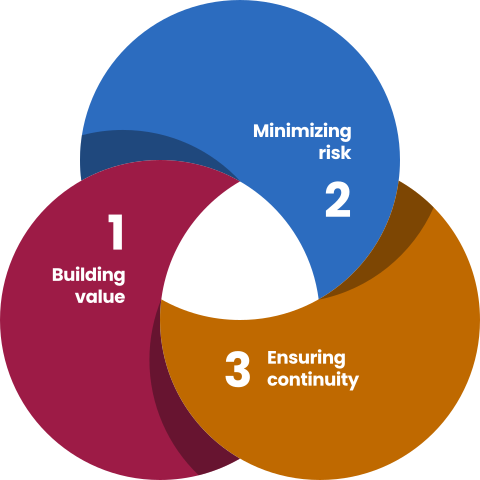
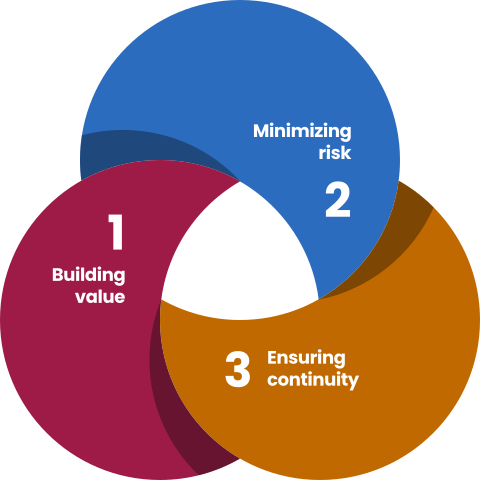
There are three core areas to Owner Based Planning:

  1. Building Value
  2. Mitigating Risk, and
  3. Ensuring Continuity
Three Spheres of Owner Based Planning

1. Building Business Value: Strategies for Growth

The cornerstone of Owner Based Planning is the ability to enhance business value. This involves implementing strategies that boost profitability, streamline operations, and foster leadership development. Advisors can utilize this framework to identify key areas for improvement and provide tailored solutions that drive growth. Whether through cash flow optimization, management development, or strategic investments, the goal is to establish a thriving business environment that can sustain itself over time.

Moreover, Owner Based Planning encourages advisors to think beyond traditional growth metrics. It emphasizes the significance of developing a robust management structure that can adapt to change and seize new opportunities. By concentrating on leadership development and succession planning, advisors can assist business owners in ensuring that their growth is not only rapid but also sustainable, paving the way for future success.

2. Mitigating Risks: Protecting Your Business Future

Business risks are inevitable; however, with the right planning, they can be managed effectively. Owner Based Planning equips advisors with the tools to help clients identify and mitigate potential risks. This includes safeguarding against financial, legal, and operational vulnerabilities that could jeopardize a business’s stability. Through comprehensive risk assessments and tailored insurance solutions, advisors can protect their clients’ interests and provide peace of mind.

Key risk mitigation strategies involve developing personal financial plans, securing key person insurance, and establishing effective asset protection measures. By addressing these critical areas, advisors can help business owners minimize the impact of unforeseen events and maintain operational continuity. This proactive approach not only safeguards the business but also supports its long-term objectives, ensuring that it can thrive in any environment.

3. Ensuring Continuity: Planning for Longevity and Success

Ensuring business continuity is a vital aspect of Owner Based Planning. Advisors are responsible for developing strategies that secure the future of their clients’ businesses, enabling seamless transitions and long-term sustainability. This involves creating continuity plans that consider potential leadership changes, ownership transfers, and market shifts that could impact the business’s trajectory.

By focusing on continuity planning, advisors can help business owners prepare for the future, whether through buy-sell agreements, continuity bonus programs, or structured buy-out deals. These strategies are designed to maintain the business’s operational integrity and ensure ongoing competitiveness in the marketplace. By planning for longevity, advisors empower business owners to leave a lasting legacy and achieve their long-term goals.

Transforming Your Practice with Owner Based Planning

For business advisors looking to differentiate themselves in a competitive market, Owner-Based Planning offers a transformative opportunity. By adopting this strategic approach, advisors can expand their service offerings and add more value to their clients. It allows them to move beyond transactional relationships and establish lasting partnerships.


A group of people in business attire sitting around a conference table. BEI's Owner Based Planning banner is over the image.

Discover what Owner Based Planning can do for your practice.

Exit Planning Is a Whole-Person Journey

How to recognize and respond to the emotional roadblocks owners face when planning their exits.

Most advisors know this moment well: a business owner says they want to exit on their terms, yet months (or years) pass with no meaningful action. You’ve shared financial models, talked timelines, and outlined next steps—only to be met with hesitation or silence.

It’s not that they don’t understand the plan. It’s that they’re not emotionally ready to follow it.

It’s Not Just Business—It’s Personal

Most owners have spent decades pouring their energy, identity, and purpose into their businesses. When you bring up the idea of selling or stepping away, you’re not just introducing a transaction. You’re introducing a life change.

As Steven Furtado, Co-Founder of Savoir Wealth and a former business owner himself, explains:

“The idea of selling their business is both daunting and bittersweet. After all, businesses are built with immense pride, sacrifice and an investment of time, energy and resources… There is a deep emotional attachment to the business, and the thought of letting go often feels like letting go of a part of themselves.

From Planning Your Business Exit: A Professional And Personal Perspective, via Forbes

How to Spot Emotional Resistance

Here are a few signs you’re dealing with emotional—rather than rational—resistance:

  • The owner agrees with the plan but makes no moves to implement it.
  • They delay meetings, paperwork, or decisions with vague excuses.
  • They express fear, loss, or uncertainty about life after the business.
  • They hesitate to delegate or restructure, even when it’s clearly needed.

These aren’t signs of disinterest. They’re signals of emotional hesitation.


How to Navigate Exit Planning Emotion with Clients

Here are three ways you can support your clients through the emotional side of Exit Planning:

1. Name What’s Normal

“You’ve built something meaningful—it’s completely understandable that this isn’t easy.”

A simple statement like this validates their emotions and builds trust. It also helps reframe inaction as something human, not a flaw.

2. Ask Questions That Invite Reflection

Try:

  • “What does your business represent to you?”
  • “What would life after this business ideally look like?”
  • “What worries you most about stepping away?”

These kinds of questions shift the conversation from logistics to legacy—and can open up new motivation for action.

3. Reframe the Exit as a Transition

Like Steven Furtado advises, encourage owners to view the exit as a gateway rather than an end. Many owners wrongly associate Exit Planning with walking away entirely, when in reality, most plans allow for phased transitions, reduced hours, or advisory roles.

You can say:

“Exit Planning doesn’t mean walking out tomorrow. It means setting you up to have more choice—on your terms.”

That emotional shift—from loss to possibility—is often the breakthrough moment.

Don’t Wait for a Wake-Up Call

Furtado notes that many owners don’t take action until something external forces their hand—a health scare, burnout, or a life change. But those moments often reduce options and value.

As advisors, we can do better for our clients. We can help them plan when the business is still thriving, so they can exit from a place of strength—not reaction.

A More Effective Exit Planning Conversation

The most effective Exit Planning conversations are human-first. They combine business logic with emotional intelligence. They build a plan, yes—but they also build confidence and clarity.

So the next time you meet an owner who “agrees but delays,” don’t double down on numbers. Pause. Ask. Listen. Then help them move forward—not just as an owner, but as a whole person preparing for their next chapter.

Need help bringing the emotional side into your Exit Planning process?

Let’s talk. Contact us at 303‑321‑2242 or email us to learn how to support your clients more effectively.

Advisor’s Guide to Entering the Exit Planning Marketplace

3 minutes

Core Insights

  • Business owners often delay exit planning, but advisors can lead the conversation with the right tools and messaging.
  • Start by engaging your professional network—collaboration builds credibility and opens doors.
  • Focus on educating, not selling. Use consistent content like newsletters, blogs, and testimonials to stay top-of-mind.
  • Position yourself as a thought leader with content across channels, including social media.
  • Referrals and client advocacy grow naturally when value and trust are established early.

Breaking Through: How to Overcome Barriers in the Exit Planning Market

Last week, we explored the common roadblocks advisors face when introducing business owners to the Exit Planning process. Many owners believe they can wait until they’re ready to exit or assume they don’t have the time right now to begin planning. But as experienced advisors know, the only way to exit on your terms—your timing, your buyer, your value—is to start planning today.

So, Where Do You Begin in the Exit Planning Market?

You may be looping in your head, wondering:

Who should I be talking to? How do I start a conversation? Will they even listen to me?

Reach the Right Business Owners: Leverage Your Professional Network

Start by connecting with other professionals who already serve business owners—accountants, attorneys, bankers, consultants. These individuals can be invaluable allies. When you demonstrate how Exit Planning benefits their clients and creates new opportunities for their firm, you lay the foundation for a mutually beneficial relationship.

Focus on how collaboration helps everyone win—especially the business owner.

Start the Conversation: Lead with Education, Not Sales

Education is the most powerful, cost-effective tool at your disposal. Business owners don’t want to be sold to—they want insights, solutions, and clarity. Use storytelling, client success examples, and practical tips to communicate the value of early planning.

You’re not alone in educating clients about the urgency of planning. Experts like Douglas R. Batts Sr. are making national headlines calling on Baby Boomer business owners to start Exit Planning now—before it’s too late. Sharing insights like this can reinforce your message and help overcome skepticism.

Douglas R. Batts, MBA – Award-Winning Business Broker, Veteran

Consistent, educational outreach—like a well-crafted newsletter with links to content like the article above—keeps you top of mind when owners are ready to act. It also positions you as a trusted resource rather than just another service provider.

Get Business Owners’ Attention: Build Your Exit Planning Thought Leadership

Establish your credibility across multiple channels—articles, blogs, webinars, speaking engagements, podcasts, and yes, even social media. While business owners might not follow you directly, their inner circle does. When your content resonates with someone they trust, it’s more likely to be shared—and remembered.

Be sure to:

  • Include a newsletter signup on your website
  • Add content to your email signature
  • Use lead forms to collect interest from site visitors

Make it easy for people to access your content—and for new Exit Planning or Owner Based Planning opportunities to find you.

What Comes Next? Turn Exit Planning Clients into Advocates

Your first few Exit Planning clients are your strongest advocates. As you deliver real value and build trusted relationships, referrals will follow. Over time, your network grows—and so does your influence.

Looking for the right tools to reach business owners faster?

Access professional marketing materials, educational content, and proven Exit Planning tools trusted by top advisors.

We’ll help you do more of what works—and less of what doesn’t.

The Strategic Role of Insurance Advisors in Owner Based Business Planning

Using Insurance to Protect and Grow Business Value


Insurance professionals may not always be seen as the first stop for business owners seeking long-term guidance—but their deep, ongoing client relationships uniquely position them to lead impactful conversations. Through business planning, insurance advisors can go beyond product placement and begin uncovering business owners’ personal, financial, and strategic goals. By using frameworks like Owner Based Planning, insurance professionals can identify planning gaps, initiate value-building strategies, and align their services with both business continuity and future growth.

With Owner Based Planning, insurance advisors can shift from product-centric service to strategic partnership—helping owners align business performance with personal and financial priorities, while laying the groundwork for future success and continuity.

Three Core Responsibilities of the Insurance Advisor

As part of the business owner’s advisory team, insurance professionals bring critical value by:

  1. Educating the owner about planning strategies that support long-term business and personal goals.
  2. Facilitating collaboration with the owner’s broader advisory team.
  3. Delivering solutions that protect and promote business value and family security.

Owner Based Planning empowers insurance professionals to lead with questions about the owner’s vision for the business—rather than waiting for retirement or transition planning to emerge.


Step One: Understanding Owner Goals

Begin by helping the owner define income needs—during their lifetime, at retirement, and in the event of disability or death. These discussions are foundational in OBP, which emphasizes planning around the owner’s values and future aspirations.

Three overlapping spheres of Owner Based Planning representing building value, minimizing risk, and ensuring continuity.
The three spheres of Owner Based Planning, an empowering business planning process for insurance advisors..

Step Two: Evaluating Business Value and Risk in Insurance Advisor-Led Business Planning

Support the valuation process for insurance, estate, or gifting purposes. Identify income deficiencies and coverage gaps that could impact the owner’s family or business in unforeseen circumstances. This risk-based insight adds immediate value, even if a transition isn’t on the horizon.

Step Three: Preserving, Protecting & Promoting Value

Insurance advisors play a direct role in strengthening business value through protection strategies. This includes:

  • Advising on retention and incentive tools such as non-qualified deferred compensation plans.
  • Assessing the need for retirement-focused plans like defined benefit solutions.
  • Recommending and implementing key person life insurance for the business owner and top employees—safeguarding continuity in case of sudden loss.

Key person coverage is especially critical when a business’s value is tied to the contributions of specific individuals. It ensures that the business can absorb the financial impact of losing a key employee, fund temporary leadership, or support recruiting efforts—helping the company maintain momentum during a difficult transition.

Carriers like Pacific Life offer a range of planning solutions, advanced markets support, and executive benefit solutions that empower insurance professionals to deliver more value through business planning. These resources can enhance your ability to support owners with strategies like deferred compensation, key person coverage, and retirement income planning.


Step Four: Preparing for Future Liquidity Events

Even if a sale or succession is years away—or uncertain—insurance professionals can help assess whether the business is on track to meet the owner’s eventual financial goals. Owner Based Planning encourages earlier, broader conversations that focus on readiness, not timelines.

Step Five: Planning for Business Transitions with Advisor-Led Insurance Solutions

In insider transitions (e.g., to children, co-owners, or key employees), insurance professionals help:

  • Fund Buy-Sell Agreements between the owner and future stakeholders.
  • Provide key person insurance on those acquiring ownership to secure the business’s value during and after the transfer.
  • Assess income needs for the owner and family in the event of death prior to a completed transition.

More Owner Based Planning recommendation examples.

This level of planning ensures that if anything happens to a future owner or the current one, the business remains stable and the owner’s financial goals stay on track.

Step Six: Insurance Advisor-Led Business Continuity & Contingency Planning

Help review and update Buy-Sell Agreements, recommend Stay Bonuses for key employees, and ensure contingency plans are consistent with the owner’s broader goals. These strategies are vital for both single-owner businesses and multi-owner enterprises—and often overlooked until it’s too late.

Step Seven: Family Wealth and Estate Planning

Review the owner’s estate plan to ensure it aligns with current business structures, valuation realities, and personal goals. Insurance funding can help cover estate taxes, enable wealth transfer, and ensure financial security for future generations.

Carefree business owner after insurance advisor discovered their goals and crafted a successful planning strategy.


Connecting Insurance Advisor Strategy to Business Owner Goals

Through Owner Based Planning, insurance professionals become more than policy providers—they become trusted guides in long-term planning, value creation, and legacy protection. You don’t have to wait for an owner to ask about leaving the business. By leading with thoughtful questions and strategic insight, you help them build a stronger business today—and a more secure future tomorrow.

Learn how to bring Owner Based Planning into your insurance advisory approach.

Why Business Owners Delay Exit Planning

The Real Reason Owners Delay Exit Planning—and How to Break Through

Many owners assume that planning for their exit begins once they’ve decided to leave. But the reality is that effective planning starts well before that decision. By engaging owners early and reinforcing the value of growth-focused strategies, advisors can ensure a smoother transition and more favorable outcomes for all involved.

“I’ll plan my exit when I’m ready to leave.”

This common mindset among business owners is one of the biggest challenges advisors face. But overcoming this misperception doesn’t require magic—it requires clear, consistent communication that educates and empowers.

At BEI, we regularly hear from advisors looking for a reliable way to engage reluctant business owners in planning their exits. While we have proven tools to help convert hesitation into action, the first step is understanding why so many owners delay planning in the first place.

Why Exit Planning Can’t Wait: The Risk of an Unprepared Business

Most business owners know their companies aren’t ready to run without them—yet many still postpone planning. Why? Because they assume they’ll have time to prepare when the moment to exit finally arrives.

But experienced advisors know better: preparing a business for a successful exit takes years, not months. The earlier owners start, the more control they have over the outcome.

“Owners know what needs to happen. They just don’t look at it closely—or think it has to happen today. I tell them, ‘This is your final exam. Will you eat steak or Top Ramen for the rest of your life? Let’s do the work.’ And they do.” – Marko Mijuskovic, Senior Partner at WestPac Wealth Partners, CExP™ and BEI Member

Helping Owners Move Past “Not Yet”

To shift this mindset, advisors must help owners see the realities of waiting too long. That starts by clearly communicating three critical truths:

  1. There’s often a significant gap between what owners have and what they’ll need to exit on their terms.
  2. Bridging that gap takes time and consistent effort.
  3. Exit Planning isn’t just about leaving—it’s about growing. Enhancing business value and cash flow benefits owners no matter when they exit or what path they take.

This is the heart of Exit Planning: helping owners build stronger, more valuable businesses—whether they’re looking to exit in 3 years or 10. And that’s the value you bring as an advisor.

You’re not just offering a service. You’re guiding business owners toward better outcomes, greater security, and more freedom. But to do that, you need to replace uncertainty with education—and replace hesitation with clarity.

Consistent Communication = Better Engagement

One meeting isn’t enough. The most effective advisors don’t rely on one-off conversations to spark action—they use ongoing, branded content to deliver their message at scale.

Our top-performing Members consistently share planning insights with 500+ owners and advisors at least twice a month. This kind of sustained communication helps dismantle the belief that planning can wait—and instead reinforces the benefits of taking action now.

“If you have an important point to make, don’t try to be subtle or clever. Use a pile driver. Hit the point once. Then come back and hit it again. Then hit it a third time—a tremendous whack.” –Winston Churchill

Closing the Communication Gap

At the end of the day, owner inaction isn’t about unwillingness—it’s about unfamiliarity. Advisors who succeed are those who make Exit Planning familiar, relevant, and urgent through ongoing education and encouragement.

If you want to help business owners act, keep showing up with valuable information, insights, and motivation. Because when owners understand the stakes—and see the benefits—they’ll start planning with purpose.

Business owner, empowered by successful Exit Planning, sailing into the sunset.

How to Save a Legacy Business: Lessons from Sam Wo’s Possible Closure

A 116 year-old San Francisco Chinatown restaurant may close at the end of 2024... but the exit story could have been different.

The story of Sam Wo Restaurant, a 116-year-old Chinatown institution in San Francisco, is a bittersweet reflection of the complexities surrounding family-owned businesses and the necessity of proactive Exit Planning. This legendary eatery, known for its comforting Cantonese dishes and historic quirks, now faces the imminent possibility of closure as its current owner, David Ho, prepares for retirement.

For Exit Planning advisors, Sam Wo offers a compelling case study in the importance of foresight and strategic planning when it comes to navigating business transitions. While its fate is not yet sealed, the challenges the restaurant is grappling with highlight what can happen when long-term succession plans are left unresolved. At the same time, there are glimmers of hope—opportunities for legacy preservation, community revitalization, and creative adaptation that could serve as inspiration for both advisors and business owners alike.

Nighttime photo of closed shop with graffitied door in San Francisco's Chinatown.

The High Stakes of Business Transition Planning

Sam Wo’s situation underscores a fundamental truth: Every business, no matter how storied or successful, will eventually face a transition point. David Ho’s four decades of dedication to Sam Wo have created a brand synonymous with Chinatown culture. But as he reaches retirement, he finds himself in a bind—without an heir or a successor committed to carrying the torch, the restaurant risks fading into memory.

Despite interest from potential buyers, none has yet emerged with the skills, vision, and resources required to uphold the restaurant’s legacy. This hesitation stems from multiple factors: the physically demanding nature of restaurant work, the need to preserve Sam Wo’s unique cooking techniques, and the financial risk of investing in a business industry that operates on tight margins.

Exit Planning advisors can use this case to help business owners recognize the cost of delayed planning. When business transition efforts are rushed or reactive, critical opportunities to identify and groom successors, secure buy-in from stakeholders, and align the business with evolving market demands are often missed.

What Could Have Been: Missed Business Exit Opportunities at Sam Wo

Had proactive Exit planning been implemented earlier, Sam Wo’s current predicament might have been avoided. Some key exit strategies that could have mitigated this crisis include:

1. Building a Strong Succession Pipeline

David Ho’s children, Jason and Julie, were involved in the restaurant as young adults but eventually pursued careers outside the business. While this decision is valid and common, it highlights the importance of identifying potential successors early. Business advisors could have encouraged Ho to look beyond his immediate family to train employees, community members, or even external professionals who might have been passionate about carrying on the Sam Wo tradition.

2. Leveraging Partnerships and Investments

The 2015 reopening of Sam Wo after its 2012 closure was made possible by partnering with investors, including co-owner Steven Lee. This collaboration was pivotal in reviving the brand. A similar strategy could have been applied earlier to bring in younger partners or co-owners who shared Ho’s vision and could transition into leadership roles.

3. Diversifying Revenue Streams

Lee’s idea of transforming Sam Wo into a packaged food line demonstrates how legacy businesses can adapt to modern markets. If this had been explored earlier, it could have reduced dependence on the physical restaurant and provided a more scalable revenue model.

4. Documenting Legacy and Processes

The “Sam Wo way of cooking” is described as simple, yet distinctive. Comprehensive documentation of recipes, techniques, and customer service standards could have made it easier for potential successors to maintain the brand’s authenticity. Exit Planning advisors might have facilitated this by helping Ho create a formal operational handbook and training programs as part of the succession strategy.

5. Engaging the Community

Sam Wo is deeply rooted in Chinatown’s history and culture, and its potential closure would represent a loss not just for its owners but for the community at large. Proactively involving local stakeholders in discussions about the restaurant’s future could have opened doors to creative solutions, such as community ownership models or nonprofit partnerships.

Arial photo from above of San Francisco Chinatown with lanterns spanning Grant Avenue.

Key Takeaways for Exit Planning Advisors

Sam Wo’s story is a cautionary tale for the countless small business owners who pour their lives into their ventures without a clear exit strategy. Exit Planning advisors play a critical role in guiding owners through this process, ensuring that transitions are smooth, strategic, and value-driven. Key lessons from Sam Wo include:

        • Start Early: Succession planning should begin years, not months, before retirement. Encourage business owners to identify potential successors and create development plans to prepare them for leadership.

        • Preserve Intangible Assets: A business’s value often extends beyond its financials. Document its unique practices, values, and culture to ensure these elements can be passed down to future generations.

        • Embrace Flexibility: The modern marketplace offers myriad opportunities for reinvention. Encourage clients to explore creative strategies—such as franchising, licensing, or rebranding—that align with their goals and values.

        • Engage Stakeholders: Transition planning is a collaborative effort. By involving employees, community members, and other stakeholders in the process, owners can build goodwill and discover innovative solutions.

Drone arial photo view of Chinatown with Coit Tower and San Francisco Bay in the distance

What-If Scenarios: Reimagining Sam Wo’s Future

Even now, all hope is not lost. Exit Planning advisors can draw lessons from Sam Wo’s challenges to offer creative paths forward. Here are some “what-if” scenarios that demonstrate how legacy businesses can chart a hopeful course:

Community-Driven Revival:

What if Sam Wo became a cooperative or nonprofit venture? By transitioning ownership to a collective of local stakeholders—such as Chinatown community members, cultural organizations, or even loyal customers—the restaurant could continue to operate as a cultural landmark. Such a model would not only preserve the legacy but also reinforce the importance of Chinatown’s rich history.

Strategic Collaboration with Emerging Talent:

What if a partnership with a young, innovative chef or restauranteur was forged? Sam Wo’s reputation and historical appeal could attract culinary talent eager to make their mark while learning from Ho’s expertise. Business exit advisors could facilitate mentorship programs to ease the transition and ensure continuity.

A Modernized Brand Expansion:

What if Sam Wo leaned into its heritage by expanding its brand beyond the restaurant’s walls? A line of frozen meals, recipe books, or branded merchandise could introduce Sam Wo’s flavors to a global audience, creating new revenue streams while preserving its cultural identity.

Landmark Protection Efforts:

What if Sam Wo became a designated cultural landmark? Business advisors could assist in lobbying for historic preservation status, ensuring that the restaurant remains a cornerstone of Chinatown’s tourism and cultural offerings.

A Legacy Worth Saving

Sam Wo is more than a restaurant; it’s a living piece of San Francisco’s Chinatown history. Its looming closure serves as a poignant reminder of the fragility of legacy businesses and the importance of proactive planning. For Exit Planning advisors, this is a moment to reflect on the transformative power of strategic foresight. With the right tools and guidance, even the most daunting transitions can lead to opportunities for renewal, growth, and lasting impact.

Business advisors committed to solid exit strategies hold the key to ensuring that stories like Sam Wo’s end not in closure but in continuity. Let this tale inspire exit planners to help their clients preserve their legacies for generations to come.

Front of current location of Sam Wo restaurant in 2015.

The Business Advisor’s First and Second Mistakes

Have you ever wondered why it’s difficult to attract successful business owners to your practice? After decades spent working with both advisors and owners, we’ve found that advisors who want to represent owners make two fundamental mistakes:

  1. They are focused on making a sale of a product or traditional service (e.g., life insurance to fund a buy-out) rather than on listening and understanding an owner’s needs.
  2. They fail to understand that owners don’t buy services because they like the services or even the person selling them. Owners buy services to solve a business problem or seize an opportunity.

If you agree, the question is: What’s the better way for a financial / insurance advisor or CPA or attorney to approach owners?

The answer is obvious: Demonstrate an understanding of the owner’s problems and concerns, then solve them!

Less obvious is how professional advisors demonstrate that understanding and resolve an owner’s business concerns or help them seize an opportunity.

Most advisors can’t do either, and that’s great! Once you know how to uncover an owner’s concerns and have the tools you need to deliver solutions, you can attract and gain successful owners as clients without competition from their current advisors.

Uncovering an Owner’s Concerns

For years BEI-trained advisors have used a short assessment that accurately identifies and prioritizes—for both owner and advisor—an owner’s concerns and needs.

Want to learn more about BEI’s assessment resources? Set up a meeting with us!

Addressing an Owner’s Concerns

Only after owners communicate their business needs and concerns can you recommend actions to address them.

For example, Owner A’s assessment may indicate that she is most concerned about motivating and retaining key employees but not so concerned with business continuity planning. That information tells you where you are needed and where to start.

BEI has created 30-plus recommendations to address the owner concerns identified in the owner assessment. These recommendations describe how and when a course of action is appropriate and the steps you take to create and implement it. Recommendations typically include the use of one or more of your profession’s tools or products.

Two Mistakes. One Solution.

Two fundamental mistakes and two proven tools to help you avoid them: an owner needs assessment and a set of recommendations to address those needs. One practice differentiator—knowing how to address owners’ most pressing concerns—and one source for training and tools: BEI’s program for Owner-Based Planning Advisors.

To learn more about BEI’s Owner-Based Planning program and the upcoming training schedule, follow the link below.

https://exitplanning.com/learn

How Advisors Can Differentiate Themselves: Taking the Burden Off the Owner

Business owners are a rare breed. In founding their businesses, they buck the trend of working for someone. They think differently, act differently, and succeed differently from most people. This means that when it comes to planning for a successful future, they also plan differently. They typically don’t want off-the-shelf advice that every other advisor offers them. They want advisors who are different like them, and who can present creative and tailored ideas that speak directly to their needs. Being different can be a competitive advantage for advisors, but what are some of the ways they can successfully differentiate themselves? That’s the topic we’ll be looking at today.

Identify the pain on the owner’s terms

Business owners can be proud people. After all, many of them either built their businesses from the ground up or are continuing a legacy that’s close to their hearts. Because they’ve often shouldered the burden of being everything to everyone, many owners either cannot or will not admit when they have problems that might be bigger than them. Sometimes, owners deny the problems they have.

Advisors must be able to identify an owner’s unique pain on the owner’s terms. Sometimes, advisors can identify an owner’s pain based on their expertise and objectiveness. But a trap that advisors sometimes fall into is telling the owner what their problem is. Rarely do owners want to be told what to do about something, especially something as important to them as their businesses. It’s often not in their nature to take orders, even from other experts. This is an opportunity for advisors to show how they differentiate themselves.

Rather than telling owners what their problem is, advisors should invite owners to tell them what their problem is. The best way to do this is to know which questions to ask, know how to vividly show owners their pain points, and then offer a solution to the problem.

For example, an advisor may know that an owner wants to retire in five years and sell the business to liquidate the nest egg, but that the business isn’t worth enough to support the owner’s lifestyle. Instead of telling the owner, “You can’t really do what you want,” the advisor might ask, “How much do you expect to get from your business, and how did you come to that number?” These kinds of questions prompt owners to think deeply about their assumptions. It also leads them to the answers advisors already know. The key is that the business owner comes to the conclusion and chooses to act, rather than being pressured to act by an outside force. This can differentiate the advisor and makes the advisor more amenable to the business owner.

BEI is the foremost expert at showing advisors how to identify an owner’s pain points on the owner’s terms, which is a great way to differentiate themselves. We provide questions and materials that let advisors drill into what keeps owners awake at night. Our tools and strategies lay out the best ways for advisors to lead business owners to important conclusions about their futures without telling those owners what to do. These skills are great ways for advisors to show owners how they’re different in the best way possible, leading to deeper conversations and relationships.

Vividly show owners their pain points and then offer solutions

The questions that advisors ask allow them to gather the information they need to vividly show owners their pain points. It’s one thing to talk about pain points, only to let them escape into the ether once the advisor and owner conclude the consultation. It’s another to show owners where their pain lies and then offer to solve that pain. Again, the key for advisors is to lead owners to the conclusion, not force the conclusion upon them.

BEI offers advisors assessments that show owners their pain in vivid detail based on what the owner tells the advisor. This flips the script for most owners: They aren’t having a solution offered for a problem they may not think they have. Instead, they get to see what they themselves have said concerns them about their futures. Once owners see their pain in a place other than inside their own brain, the first question they often ask is, “Well, how can I fix that?”

This is where it’s the advisor’s time to shine, especially when they can access BEI tools and strategies. Advisors can offer the tailored solutions owners want at the owner’s request through BEI’s planning software. For problems outside of the advisor’s expertise, BEI gives advisors access to experts from other fields who can solve the problem and build referral networks in the process.

Stay in front of them with useful content

Sometimes, getting advice can feel transactional to business owners. Advisors who can stay in front of owners with useful and relevant content deepen their relationships with those owners and differentiate themselves in the process. But advisors tend to get busy, and hiring a dedicated marketing team can be too costly or simply the wrong fit. How can advisors stay in front of owners under these confines?

I talked with a client business owner yesterday who contacted my partner in charge of the account. He told me one of the reasons he’s decided to start planning is from reading [BEI’s] newsletters!

Takeaways

  • Successful business owners want tailored solutions because each situation is unique.
  • Advisors must know how to identify the owner’s pain on their terms to offer different solutions, which can differentiate them in turn.
  • Once they’ve identified the pain, advisors must know how to show owners their pain, offer/find solutions, and stay in front of those owners to ease the pain.
  • BEI has tools and strategies that make advisors stand out to business owners.

Aliquam scelerisque pretium erat, posuere hendrerit est laoreet quis. Aliquam nec pretium nisi. Lorem ipsum dolor sit amet, consectetur adipiscing elit. Quisque tristique purus scelerisque tempus posuere. Integer sed rutrum magna. Vestibulum vitae lobortis nisl. In aliquet nisi non felis lacinia, a luctus est accumsan. Sed ipsum tellus, tincidunt ac aliquam ac, porttitor vitae eros. Integer elit massa, imperdiet ut tincidunt sit amet, scelerisque id elit. Quisque ac pharetra justo. Phasellus eu justo laoreet, pretium lorem elementum, molestie libero. Curabitur malesuada eleifend enim id scelerisque.

Female Pioneers and the Role of Emotional Intelligence in Exit Planning

As we celebrate Women’s History Month, it’s a perfect opportunity to spotlight the lasting contributions of women in the financial sector! While navigating through the intricacies of the financial industry, women have not only shattered glass ceilings but have also introduced innovative approaches and perspectives that have enriched the industry. 

Throughout this post, we’ll highlight two entrepreneurs making a lasting impact on the business world. Join us as we explore the emotional complexities of Exit Planning with the host of Charis Your Life® Podcast and Fulfillment & Life Transition Coach, Charis Santillie, CFLC, CFT, and Dr. Allie Taylor, Founder of ClearWater Insights!

Emotional Intelligence in Exit Planning: Insights from Charis Santillie

For business owners and their advisors alike, business planning requires both financial and emotional intelligence, combining economic strategy with personal resilience, strength, and empathy. Charis Santillie’s poignant narrative on our podcast “Why We Plan” sheds light on the intricate dance of emotions business owners navigate as they contemplate and execute their exit strategies. Santillie, with her rich background in entrepreneurship and coaching, underscores the critical role of emotional intelligence in this process.

Understanding the Emotional Maze

Santillie’s insights from the recent Why We Plan podcast episode,The Emotional Maze of Exit Planning with Charis Santillie, CFLC, CFT resonate deeply with our mission at BEI. Her personal journey, marked by her family’s challenging exit experience, has fueled her passion for assisting entrepreneurs through their transitions. Her approach, deeply rooted in neuroscience, emphasizes the necessity of recognizing and managing fear—a prevalent yet often unacknowledged emotion during the exit planning phase.

The Role of Advisors

Santillie expertly highlights the indispensable role of advisors in navigating the emotional aspects of Exit Planning. Advisors, equipped with empathy and an understanding of the psychological dimensions of exits, can significantly influence the outcomes of these transitions. By integrating emotional intelligence into their practices, advisors can better support their clients through the complexities of letting go and moving forward.

Inside the Castle: A Dive Into the Owner’s Inner World with Allie Taylor

During a recent webinar hosted by BEI, Taylor delved deep into the psyche of business leaders, exploring how emotional intelligence and a thorough comprehension of one’s own motivations can drastically influence the success of an exit strategy.

Her approach, which builds on her foundational work presented at the BEI National Conference, offers a fresh perspective on how advisors can better serve their clients by integrating psychological awareness into their practices. Taylor’s presentation underscored the importance of advisors recognizing several complex challenges owners face when considering an exit. For more on the many psychological forces impacting owners and their exits, check our recent blog: Navigating Psychological Forces in Business Exits: Insights for Professional Advisors.

https://exitplanning.com/webinars/?wchannelid=sw5zip1zi8&wmediaid=mhthkb9rv9

The Bottom Line

Successful Exit Planning transcends financial calculations to include the deep emotional dynamic between an owner and their business. As BEI continues to empower the next generation of advisors and business professionals, we encourage each and every member of our BEI Network to consider the emotional side of Exit Planning. BEI is committed to empowering advisors across the country to become the indispensable asset to their clients, schedule a call with us today to learn more about our intuitive platform!

Business Continuity Challenges for Sole-Owners

As we celebrate Women’s History Month, it’s a perfect opportunity to spotlight the lasting contributions of women in the financial sector! While navigating through the intricacies of the financial industry, women have not only shattered glass ceilings but have also introduced innovative approaches and perspectives that have enriched the industry. 

Throughout this post, we’ll highlight two entrepreneurs making a lasting impact on the business world. Join us as we explore the emotional complexities of Exit Planning with the host of Charis Your Life® Podcast and Fulfillment & Life Transition Coach, Charis Santillie, CFLC, CFT, and Dr. Allie Taylor, Founder of ClearWater Insights!

Emotional Intelligence in Exit Planning: Insights from Charis Santillie

For business owners and their advisors alike, business planning requires both financial and emotional intelligence, combining economic strategy with personal resilience, strength, and empathy. Charis Santillie’s poignant narrative on our podcast “Why We Plan” sheds light on the intricate dance of emotions business owners navigate as they contemplate and execute their exit strategies. Santillie, with her rich background in entrepreneurship and coaching, underscores the critical role of emotional intelligence in this process.

Understanding the Emotional Maze

Santillie’s insights from the recent Why We Plan podcast episode,The Emotional Maze of Exit Planning with Charis Santillie, CFLC, CFT resonate deeply with our mission at BEI. Her personal journey, marked by her family’s challenging exit experience, has fueled her passion for assisting entrepreneurs through their transitions. Her approach, deeply rooted in neuroscience, emphasizes the necessity of recognizing and managing fear—a prevalent yet often unacknowledged emotion during the exit planning phase.

The Role of Advisors

Santillie expertly highlights the indispensable role of advisors in navigating the emotional aspects of Exit Planning. Advisors, equipped with empathy and an understanding of the psychological dimensions of exits, can significantly influence the outcomes of these transitions. By integrating emotional intelligence into their practices, advisors can better support their clients through the complexities of letting go and moving forward.

Inside the Castle: A Dive Into the Owner’s Inner World with Allie Taylor

During a recent webinar hosted by BEI, Taylor delved deep into the psyche of business leaders, exploring how emotional intelligence and a thorough comprehension of one’s own motivations can drastically influence the success of an exit strategy.

Her approach, which builds on her foundational work presented at the BEI National Conference, offers a fresh perspective on how advisors can better serve their clients by integrating psychological awareness into their practices. Taylor’s presentation underscored the importance of advisors recognizing several complex challenges owners face when considering an exit. For more on the many psychological forces impacting owners and their exits, check our recent blog: Navigating Psychological Forces in Business Exits: Insights for Professional Advisors.

https://exitplanning.com/webinars/?wchannelid=sw5zip1zi8&wmediaid=mhthkb9rv9

The Bottom Line

Successful Exit Planning transcends financial calculations to include the deep emotional dynamic between an owner and their business. As BEI continues to empower the next generation of advisors and business professionals, we encourage each and every member of our BEI Network to consider the emotional side of Exit Planning. BEI is committed to empowering advisors across the country to become the indispensable asset to their clients, schedule a call with us today to learn more about our intuitive platform!