2026 BEI National Conference - registration is open. Secure your spot today.

The Crucial Role of Advisors in Planning for an Owner’s Post-Business Exit Lifestyle 

For many business owners, the decision to exit their business is a significant milestone in their entrepreneurial journey. Whether it’s retiring, selling the company, or passing it on to the next generation, the post-exit phase is both exciting and challenging. Business owners often have a vision of what they want their life to be like after the exit, however realizing that vision and taking the steps necessary to ensure it happens takes careful planning and execution. This is where advisors play a pivotal role in helping business owners envision and achieve their post-business exit lifestyle, not just for themselves, but for their family and the legacy of their business. 

Understanding the Business Owner’s Vision 

The first step for advisors is to understand the business owner’s vision for life after the exit. This vision goes beyond financial goals and includes aspects such as retirement plans, lifestyle choices, and the legacy they want to leave behind. Advisors must engage in open, empathetic conversations to gain insights into the business owner’s personal aspirations, family dynamics, and the role the business has played in their life. The more trust you can build with your owner clients early in an engagement, the more confident they will be in you to guide them to their post-exit goals.  

Balancing Personal and Financial Goals 

Envisioning a post-business exit lifestyle involves a delicate balance between personal and financial goals. Advisors play a critical role in helping business owners strike this balance. They can assist in creating a comprehensive plan that ensures the business owner’s personal aspirations are aligned with their financial resources, because oftentimes there is a large asset gap that must be addressed in the time before the exit.  This may involve evaluating investment strategies, retirement savings, and estate planning to make sure the business value is at a place where the transition can be executed as smoothly as possible.  

Strategic Timing and Transition Planning 

One of the most important aspects of achieving a successful post-business exit lifestyle is strategic timing and transition planning. Advisors can help business owners determine when it is the right time to exit and how to ensure a smooth transition. This may involve preparing the business for sale, identifying the right successor, or developing a succession plan that aligns with the owner’s vision and the long-term well-being of the company. No matter the age or place in the ownership lifecycle that your client is in, strategic planning takes time to produce a profitable outcome.  

Risk Mitigation and Contingency Planning 

In the pursuit of their post-exit lifestyle, business owners face various risks. Advisors must identify these risks and help clients develop strategies for mitigating them. This can include contingency or continuity plans for unexpected events, diversifying investments, and optimizing tax strategies to protect the wealth accumulated during their entrepreneurial journey. By proactively addressing potential obstacles, advisors help secure the business owner’s post-exit future. 

Family Dynamics and Wealth Transition 

For many business owners, ensuring the well-being of their family is a top priority. Advisors can play a crucial role in facilitating discussions about wealth transition and inheritance. They can help business owners establish family governance structures, educate heirs about financial matters, and promote responsible stewardship of the family’s wealth. Ensuring a smooth transition of wealth to the next generation is an essential part of creating a lasting legacy. 

Maintaining the Business Legacy 

Beyond personal and family goals, many business owners are concerned about the legacy of their company. Advisors can help them preserve the legacy by identifying potential buyers or successors who share the same values and vision. They can also assist in the development of a strategic plan that ensures the business’s continued success after the owner’s exit, thus safeguarding its legacy for years to come. 

Psychological Support and Emotional Preparedness 

Envisioning a post-exit lifestyle is not just about numbers and strategies; it’s also a deeply personal and emotional journey. Owners need psychological support and guidance during this transition. Advisors – either because of their knowledge or with the support of their advisor team – can help clients manage the emotional challenges associated with letting go of a business they’ve built and nurtured, helping them navigate the sense of purpose and identity that often comes with being a business owner. 

Monitoring and Adaptation 

The journey toward a desirable post-business exit lifestyle is not a one-time event but an ongoing process. Advisors should regularly monitor and adapt an owner’s plan as circumstances change. This includes keeping abreast of shifting market conditions, revisiting investment strategies, and ensuring the client’s goals remain aligned with their evolving vision. 

Conclusion 

The role of an advisor in helping business owner clients envision their post-business exit lifestyle cannot be understated. Beyond mere financial planning, advisors serve as navigators, strategists, and visionaries. They are essential in guiding business owners towards a post-exit life that aligns with their personal aspirations, family well-being, and the legacy of their business. 

By engaging in open and empathetic conversations, striking a balance between personal and financial goals, and addressing risks and contingencies, advisors provide invaluable assistance to business owners as they embark on this significant life transition. The ultimate goal is to create a harmonious post-exit lifestyle that allows the business owner to enjoy the fruits of their labor, provide for their family, and ensure that their business legacy endures for generations to come. In this way, advisors play a crucial role in shaping the future for both the business owner and their business itself. 

For more conversation about this topic, watch a recent webinar recording by BEI Member Jim Carlisle and Charis Santille titled, “Find Their Way After Exit Day.”

Using BEI’s New Planning Software & The Importance of Technology in the World of Business Planning 

Businesses are unique, not only in what they offer their customers, but in their operations, their use of technology, their culture, and the vision their owners have for the future. As a business advisor, you play a pivotal role in helping owners make decisions related to key areas such as cash flow management, business continuity, succession planning, and growth strategies. To help owners navigate challenges, seize opportunities, and make informed decisions, you need more than industry knowledge to become that trusted advisor. At BEI, we believe that providing advisors with the tools to deliver custom solutions to their clients and a tangible path forward to reach their goals is indispensable to streamlining your work and impacting your clients’ lives. That’s why we are excited to announce a new software and the ways we provide the most valuable business planning software on the market.

EPIC is Now PlanIt

The BEI team spent months collecting feedback and suggestions about our previous software, EPIC, and what areas needed improvement.  We brought in a talented technology team to build a brand-new platform called PlanIt to improve user-design, enhance planning functionalities, and implement features that would best benefit advisors like you. 

What’s New?

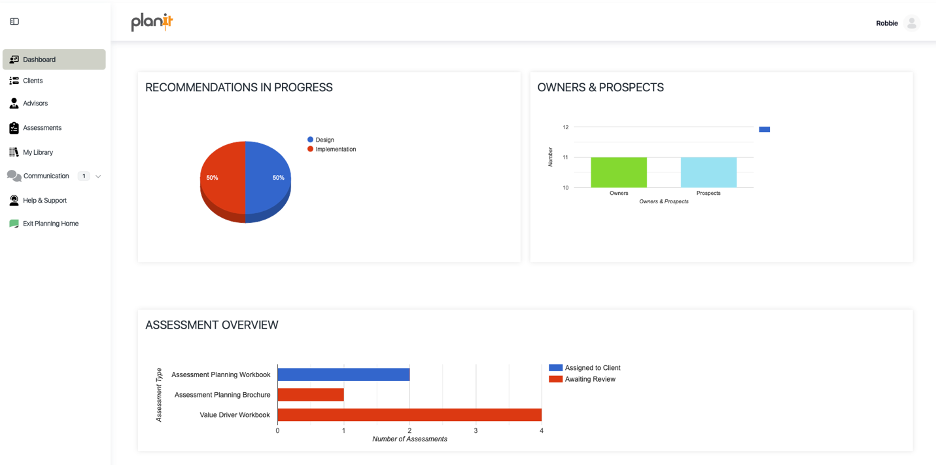
While much of PlanIt has the same functionality as EPIC, we have made a few improvements during development prior to launch. PlanIt has a new, sleek design with a more intuitive path for planning work. 

For a guided demo of PlanIt with BEI CEO Jared Johnson, watch the recording of his latest webinar!

Data-Driven Decision-Making

One of the primary reasons for utilizing software in your planning practice is the ever-increasing importance of data in prioritizing tasks, managing teams, and executing on your clients’ plans. Having a software to manage multiple clients and multiple plans enables you to track progress with your clients and make decisions based on their specific recommendations. With this new software release, advisors will have a comprehensive view of their planning activities and better visualization of the progress being made. 

**For illustration purposes only**

Time Efficiency through Collaboration

Time is a precious resource, and business advisors often must juggle multiple clients and projects simultaneously. Utilizing the right software can significantly enhance your time management capabilities, especially through team communication. Within PlanIt, advisors can send messages to other advisors on the client team, enabling real-time communication without the need for phone calls or lengthy email exchanges. This streamlined approach fosters efficient collaboration while working on a plan, allowing advisors to free up time to focus on strategic thinking and value-adding activities for their clients and their practices.

Customized Recommendations and Reporting

Your clients are not looking for a “one-size-fits-all” strategy for their business. Being able to provide customized recommendations and planning documents is what sets you apart and builds that relationship and trust between you and your clients. PlanIt takes personalization to the next level by providing recommendations based on specific owner objectives and company requirements. Whether you are working with multiple owners, multiple companies, or a combination of both, you can create truly customized plans tailored to each owner and company’s unique needs.

Want to learn more? Book a meeting with a member of the BEI Team for a demo of the PlanIt software!

Taking a Step Back: Recognizing the Role of Technology as an Advisor 

We are confident that PlanIt will provide you with an efficient and effective planning tool to use with your business owner clients. However, it’s also worth noting the broader reason for the need to invest in a planning software such as PlanIt in that the role of technology in the advisory services space is increasing at a rapid pace. 

In an evolving business landscape with more owners than ever before thinking about their eventual exits, the role of business advisors is more critical than ever. Software has become an essential companion for advisors, enabling them to harness the power of data, streamline their workflow, and provide strategic guidance that drives success. By investing in the right software tools, business advisors can not only enhance their own capabilities but also deliver superior value to their clients. 

Consider the benefits that a technology solution would bring to your practice: 

1.    Data Driven Decision Making

One of the primary reasons advisors need specialized software is due to the ever-increasing importance of data in decision-making. Businesses generate vast amounts of data each day – from sales data and financial records to customer data and market trends. To provide the most effective advice, advisors must have the means to collect, analyze and interpret this data quickly and accurately. With the right software, data analytics and visualization capabilities allow advisors to make data-driven recommendations that drive success.

2.    Time Efficiency 

Time is a precious resource, especially because advisors often have to juggle multiple clients and multiple projects simultaneously. Specialized planning software can significantly improve time management capabilities helping advisors plan their workload, track progress, and meet deadlines. Customer Relationship Management (CRM) software streamlines client communication, making it easier to stay organized and responsive. By automating tasks and processes, advisors can free up time to focus on strategic thinking and value-added activities. 

3.    Market Research & Competitive Analysis 

Successful advisors must stay ahead of industry trends and understand their clients’ competitive landscapes. Specialized software tools provide access to vast databases of market research and competitor information. Technologies can help advisors identify emerging trends, benchmark client performance against industry standards, and uncover new opportunities. By having real-time access to market data and analysis, advisors can offer proactive insights that drive competitive advantage. 

4.    Financial Modeling & Forecasting 

Financial expertise is a cornerstone of effective business advising. Specialized financial modeling and forecasting software empowers advisors to create detailed financial projections, scenario analyses, and budgeting plans. These tools enable them to assess the financial health of a business, identify potential risks, and devise strategies for growth and profitability. With accurate financial modeling, advisors can provide clients with a clear roadmap to achieve their goals. 

5.    Compliance & Risk Management

In today’s regulatory environment, businesses face an ever-growing list of compliance requirements and risks. Specialized software can help advisors keep up with changing regulations and be sure their clients are in full compliance. Moreover, risk management software provides tools to assess and mitigate potential risks, from cybersecurity threats to market volatility. This proactive approach safeguards both the advisor’s reputation and the client’s business. 

6.    Client Collaboration & Reporting 

Effective communication is vital in the client-advisor relationship. Specialized software often includes collaboration and reporting features that make it easier for advisors to share insights, progress reports, and recommendations with clients. These tools enhance transparency and foster stronger client-advisor relationships, leading to greater trust and long-term partnerships.

Conclusion

In this digital age, staying ahead means staying equipped with the right technology. At BEI, we’ve worked with hundreds of advisors over the years, listening to how their challenges and roadblocks evolve with the emergence of technology and the nature of working with the modern-day business owner. That is why it was so important to us to design PlanIt in a way that works best for the advisor, allowing you to provide the most effective guidance to your clients in the most efficient and manageable way. 

Unlocking Success: Employee Stock Ownership Plans (ESOPs) as an Exit Strategy

As business owners approach the inevitable crossroads of exiting their companies, they are faced with a multitude of options. One compelling strategy that has gained popularity in recent years is the Employee Stock Ownership Plan (ESOP). ESOPs offer a unique path for business owners to transition out of their companies while providing employees with a stake in the business’s success.

In this blog, and in the spirit of Employee Ownership Month this October, we will explore how ESOPs work, the benefits and challenges they present to business owners, and how advisors should present ESOPs as an Exit Planning solution.

How ESOPs Work

An Employee Stock Ownership Plan (ESOP) is a qualified retirement plan that effectively allows employees to become partial owners of the company. Here’s a simplified overview of how ESOPs typically work:

  • Establishing the ESOP: After careful planning, a company establishes an ESOP trust, which holds shares of the company’s stock on behalf of employees. To fund the plan, shareholders either sell stock, contribute shares directly, or the company will contribute cash (which can be used to purchase shares) 
  • Employee Participation: Most full-time eligible employees participate in the ESOP. Certain exclusions can be made for union members and similar defined classes. Over time, employees accrue shares in the plan. They do not pay out-of-pocket for these allocations.
  • Valuation: An independent appraiser determines the value of the company’s shares annually. This valuation process ensures that employees’ ESOP accounts reflect the fair market value of the shares they own.
  • Employee Benefit: Share allocations vest over time, like a 410(k).  Upon retirement or separation from the company, a participant’s vested shares are sold back to the company at a current valuation. They can pocket those gains or roll the proceeds into another qualified retirement plan.

Here’s more detailed information on how an ESOP works.

Benefits of ESOPs for Business Owners

  • Ownership Transition: ESOPs can provide an orderly and gradual transition of ownership, allowing business owners to step back while retaining equity and/or a leadership role with the company. Post-transaction, an employee-owned company’s board of directors maintains operational control. Companies remain independent.
  • Tax Advantages: ESOP transactions can offer tax benefits to both the selling shareholder and the company itself. In many cases, a shareholder’s capital gains from selling equity to the ESOP can be deferred and potentially eliminated altogether. Companies can receive income tax deductions for contributions and can even become tax-free entities.
  • Employee Engagement & Incentives: ESOPs can boost employee morale and productivity, as employees have a financial stake in the company’s success. This can lead to improved company performance and profitability. When employees gain a unique retirement benefit in the form of stock allocations, the employee-owned company as a whole tends to outperform their peers.
  • Preservation of Legacy: Business owners who have poured their heart and soul into their company can use an ESOP to preserve their legacy and ensure the company’s continuation.
  • Upside & Flexibility: Unlike most business transitions, ESOPs offer continuity of leadership and opportunities for shareholders to sell partial holders and get a second “bite at the apple.” An employee-owned company can also be sold to a third-party. Additionally, when ESOPs prosper, that upside is available to all stakeholders.

To learn more about upside potential and flexibility in ESOPs, watch the recent webinar recording hosted by David Blauzvern of CSG Partners.

Challenges of ESOPs for Business Owners

  • Complexity: Like an M&A transaction, ESOPs have unique intricacies. Business owners should fully appreciate the ESOP process, and will likely rely heavily on expert advice and professional guidance.
  • Structured Transaction: Plan formations and ongoing management are regulated by the US Department of Labor, based on rules set by the IRS. As a result, a regimented transaction process and diligent plan oversight are necessary.
  • Initial Cost: The expense of forming an ESOP can be on par with an M&A transaction. Legal, valuation, and trustee fees all contribute to the overall cost.
  • Sale Price: A trustee cannot offer more than fair market value for company stock. That’s typically in line with what a financial buyer could pay. This might be seen as a negative to owners who believe they can get more by selling outright to a strategic buyer.
  • Ongoing Commitment & Maintenance: If business owners don’t already have a strong management team in place, their continued engagement with the company may be necessary post-transaction. Further, since an ESOP is a ERISA-authorized qualified retirement plan, trustee oversight of plans and annual company valuations are required.

Presenting ESOPs as an Exit Planning Solution

For professional advisors and business consultants, effectively presenting ESOPs as an Exit Planning solution requires a thorough understanding of the client’s goals and business dynamics. Here are some key steps to consider:

  1. Assessment: Begin by assessing the client’s business, financial situation, and long-term objectives. Determine whether an ESOP aligns with their ultimate goals.
  2. Education: Educate the client about ESOPs, explaining how they work, their benefits, and potential challenges. Provide case studies and examples to illustrate real-world applications.
  3. Valuation: Help the client understand the valuation process and how it impacts the ESOP transaction. Highlight the potential tax advantages of selling to an ESOP.
  4. Implementation: Map out a formal ESOP process with the client. Steps may include determining feasibility, selecting an optimal structure, securing third-party financing, engaging an independent trustee, establishing an the employee trust, negotiating a transaction, and finalizing plan documents. ESOP specialists may be needed for some, if not all these steps. With that in mind, assist the client in the selection of third-party professionals.
  5. Employee Communication: Assist with the plan rollout process and encourage ongoing communication with employees to ensure they understand the ESOP’s benefits and their role in the plan’s success.
  6. Long-Term Strategy: If the transaction does not represent a complete business exit for your client, work with them to develop a long-term strategy for the business post-ESOP, addressing their continued involvement and ultimately, their transition out.

How BEI ESOP Partners Can Help: CSG Partners

At BEI, we want advisors to be able to leverage your expertise, tools and industry partnerships to help their business owners thrive. Knowing that advisors appreciate the value of an extensive Exit Planning toolkit, we urge advisors interested in ESOPs as a planning solution to connect with our partners, including CSG Partners.

BEI supports CSG and their work in the ESOP market because they have guided hundreds of companies nationwide through the employee ownership process – from feasibility studies to financing and completed transactions. CSG Partners focuses on education geared towards advisors like you to help you honor and strengthen both your client-advisor relationship and your client’s perception of their Exit Planning experience.

If you are an advisor looking to adopt ESOPs to your toolkit, get connected with CSG Partners in a variety of ways:

Conclusion

Employee stock ownership plans (ESOPs) offer a compelling Exit Planning solution for business owners looking to transition out of their companies while preserving their legacy and providing employees with a stake in the company’s success. By understanding how ESOPs work, recognizing their benefits and challenges, and presenting them effectively to clients, advisors can help business owners make informed decisions about their exit strategy, ultimately contributing to successful transitions and continued business prosperity.

Transforming Owner Resistance into Opportunities with Proven Strategies

See how BEI helps professional advisors like you overcome owner objections to business planning conversations.

When BEI engages with new and prospective professional advisors, some tell us about a common hurdle that prevents them from having the success they want: “Owners don’t want to talk about succession planning with me.” Even though advisors want to provide their important services and business owners know they should have a plan for their eventual business exits, there’s still resistance to the planning conversation.

The reasons why business owners feel this way can be numerous. They may misinterpret Exit Planning as someone ripping them away from their businesses against their will. They may also think that developing a plan for transition will take up too much of their time. 

While these reasons are the result of misunderstanding the point and process of Exit Planning, it doesn’t mean that advisors should disregard them as there is a large opportunity to capitalize on with owners just like this. Typically, advisors just need to frame the offer of talking about Exit Planning differently. One of the most effective ways to do this is for advisors to rely on their core expertise.

Keep Planning Conversations in Your Wheelhouse

All successful advisors have exceptional credentials in their respective professional fields. The obstacle that falls in their way is often related to balancing their technical expertise with the relationship-building skills necessary to become a successful advisor. 

For many business owners, the idea of an advisor coming to them to talk about leaving their businesses can be jarring. After all, it’s likely that they see their businesses as an extension of themselves. So, having someone suggest that they should plan for when it’s time for that extension to go away can be confusing and even threatening.

The way to overcome objections about business planning is for advisors to talk to owners in the owners’ language, using their core advisory expertise.

For example, we recently spoke with a CPA who uses the BEI Premium License to attract, engage, and eventually develop a plan with clients. When this advisor first started out, he would open his planning discussions with both current and prospective clients by asking, “Would you like to talk about exiting your business?” Usually, business owners would decline. He started to get frustrated, so he reached out to BEI. We suggested that, at least initially, he focus on how his core expertise fits into succession planning rather than focusing on outright Exit Planning.

This meant that rather than asking his clients if they’d like to specifically talk about leaving their businesses, he would ask them questions like, “What kinds of tax-minimizing retirement planning have you done?” or “How do you think taxes might affect you and your business when you eventually sell and retire?” These kinds of questions do two things:

  1. They probe at business owners’ pain points without directly talking about their business exits. By asking questions about their futures without implying there is a problem, advisors can let business owners identify areas that they consider to be issues. When business owners identify a problem with how they see the future of their business, they’re more likely to commit to a conversation.
  1. They let advisors guide the conversation toward Exit Planning using their core expertise. By leading with what they know, advisors can talk about aspects of Exit Planning with full confidence and help business owners identify what might be bothering them about their business exits. As a bonus, those advisors are more likely to offer products and services already being sold within their firm. 

How BEI Helps Facilitate Planning Conversations

One of the major benefits of BEI’s tools, strategies, and content licensing is that these aspects help advisors use their technical skills on a larger playing field. Exit Planning Advisors use their core expertise to open the conversation about Exit Planning on terms that both they and their business-owning clients understand and are comfortable with. 

It’s easy for advisors to over leverage their expertise without asking themselves why owners would care about what they’re telling them. BEI helps advisors balance their technical expertise with the relationship-building skills they need to establish the Exit Planning conversation properly, resulting in success not only for the client, but for the advisor as well.

From assessment tools and documented methods to show their expertise, to lists of questions to ask and access to advisors who have had proven success in breaking through resistance to Exit Planning, BEI knows how to help advisors start the Exit Planning conversation successfully.

Compassionate Capitalism: The ESOP Revolution

Author:  Kelly Finnell, President of Executive Financial Services, Inc.

When business owners consider selling their company, they often fall into one of two distinct categories. There are those who seek to maximize the sales price and receive as much cash upfront as possible, driven primarily by financial gain. And then, there are those who aspire to a more comprehensive vision. Beyond the desire for a good selling price, these business owners aim for a transaction that not only rewards them but also safeguards their employees and preserves the cherished company culture. These individuals can be aptly described as Compassionate Capitalists.

Capitalism and Compassion: An Age-Old Debate

The debate surrounding Capitalism and its relationship with greed has persisted since the very inception of the economic system. Philosophers, historical figures, and ordinary people alike have all weighed in on whether Capitalism inherently relies on unchecked self-interest, or if it can coexist with compassion and societal responsibility. Some argue that Capitalism thrives on self-interest, while others contend that it can function harmoniously with compassion, benefiting not just business owners but society as a whole.

Historical Perspectives on Capitalism

To delve deeper into this debate, let’s examine the views of two iconic figures from history: Karl Marx and Andrew Carnegie. Marx, a 19th-century German philosopher and economist, viewed Capitalism as inherently exploitative. He believed it created social and economic inequalities, with Capitalists profiting from the labor of workers who received less than the value of their contributions. Marx advocated for wealth redistribution and worker ownership of production means to address these issues.

In contrast, Andrew Carnegie, a Scottish-American industrialist and philanthropist, believed Capitalism could be a force for good. He argued that the accumulation of wealth was a natural part of the economic system but emphasized that wealthy individuals had a moral obligation to use their riches for the betterment of society. Carnegie donated millions of dollars to support causes such as education and public libraries, viewing philanthropy as a means to address inequality and poverty within the existing economic system.

Employee Stock Ownership Plans (ESOPs): Bridging the Gap

The emergence of Employee Stock Ownership Plans (ESOPs) in the mid-20th century represents a practical manifestation of both Marx and Carnegie’s ideals. ESOPs empower workers through ownership while operating within the framework of Capitalism. Developed by Louis Kelso, ESOPs aimed to align the interests of employees and owners, enhancing motivation, productivity, and shared success.

The History of ESOPs

ESOPs trace their roots to the mid-20th century when the concept of employee ownership gained traction as a response to labor challenges and changing economic landscapes. In the 1950s, economist and lawyer Louis Kelso developed the framework for ESOPs, believing that employee ownership would lead to increased motivation, productivity, and commitment to a company’s success.

The Employee Retirement Income Security Act (ERISA) in 1974 provided legislative support for ESOPs, establishing guidelines for their administration, funding, and fiduciary responsibilities. Subsequent amendments to the tax code enhanced the tax advantages of ESOPs, making them more attractive to business owners seeking socially responsible ownership transitions.

The Benefits of ESOPs

ESOPs offer compelling advantages for both business owners and employees. Owners can defer or eliminate capital gains taxes when selling shares to the ESOP, making it an attractive exit strategy. Employees, on the other hand, gain an ownership stake in the company and benefit from tax-deductible contributions made by the company to the ESOP. As the ESOP allocates shares over time, employees enjoy the appreciation of those shares, enhancing their financial well-being and sense of ownership.

Furthermore, ESOPs motivate employees by giving them a genuine stake in the company’s success. The sense of ownership fosters higher engagement, increased morale, and a broader range of workplace benefits. This model aligns the interests of workers with those of management, creating a more collaborative and equitable workplace.

A Compassionate Capitalist Case Study

A real-world example illustrates the power of Compassionate Capitalism through ESOPs. In 2011, a defense contractor with 1200 employees, considering an ESOP transaction, transitioned to an employee-owned model. Over the next decade, it experienced significant growth, and in 2020, it sold for $1.6 billion. This resulted in hundreds of millionaires among the ESOP participants.

One poignant story from this transition involved a long-tenured mailroom employee who, after the sale, learned he would receive over $4 million from his ESOP account. Overjoyed, he planned to use this windfall to establish a fund to pay for his grandchildren and great-grandchildren’s college tuition.

Want to learn more from the firm who carried out this transaction? Click HERE to register for an upcoming webinar with our partners at Executive Financial Services, Inc.! 

The Essence of Compassionate Capitalism

In the ESOP model, business owners do not need to sacrifice a fair purchase price to protect their employees, preserve company culture, and create generational wealth opportunities. Compassionate Capitalism, as exemplified by ESOPs, demonstrates that Capitalism and compassion can coexist harmoniously. It’s about centering employees, nurturing a thriving company culture, and providing opportunities for financial prosperity while still achieving a fair market value for the business.

In the words of Andrew Carnegie, “The man who dies thus rich dies disgraced.” Through Compassionate Capitalism and ESOPs, business owners can realize their vision of wealth and success while uplifting their employees and contributing to a more equitable and sustainable economy for all. As we reflect on the age-old debate between Capitalism and compassion, ESOPs provide a compelling answer that bridges the divide and propels us towards a more compassionate and prosperous future.

Join us for an upcoming webinar with guests from our trusted partners at Executive Financial Services, “ESOPs: How Successful Advisors Participate and Benefit,” where you’ll gain valuable insights into the world of ESOPs and discover how to leverage them to benefit your clients and your own practice. 

Overcoming Challenges in Adding Exit Planning to Your Advisory Practice

Exit Planning is a critical component of financial advisory services, helping business owners prepare for the successful transition of their businesses. However, despite its importance for owners, many advisors face several pain points and challenges when introduced to the concept of Exit Planning and the idea of adding it as a service to their professional practice. In this blog post, we’ll explore the various hurdles and obstacles that advisors encounter when considering Exit Planning and how these can be overcome to ensure success in this vital area.

Advisor Pain Points & Solutions

  • Limited Budget Availability

One of the primary challenges advisors face when looking to incorporate Exit Planning into their practice is the perception that it requires a substantial budget. The cost associated with training and planning tools can deter advisors from taking the first step.

Solution: Contrary to popular belief, effective Exit Planning doesn’t always require a massive financial commitment. Advisors can start small and gradually invest as their practice grows. We’re confident you will see the long term benefits of offering Exit Planning as a service, even with a foundational level of Exit Planning knowledge

  • Compliance Approval

Advisors often encounter hurdles in obtaining compliance approval to offer Exit Planning services or use the associated tools and content. Regulatory constraints can slow down the process and create frustration.

Solution: Collaborate with service providers of these solutions to streamline the approval process. Ensuring that all materials and processes meet regulatory standards makes it easier for advisors to obtain the necessary approvals. The BEI Team has worked with several compliance departments to get solutions approved for advisors. 

  • Lack of Bandwidth

Many advisors have limited bandwidth due to their existing client commitments and workload. Adding Exit Planning services can seem overwhelming.

Solution:  Integrating Exit Planning into your  practice can be a gradual process. Delegate tasks when possible and make use of tools and resources that can simplify the process. With the right tools in place, you can clear up some of the bandwidth challenges through streamlined communication among team members, project timelines and deadlines, and automated systems for data entry and report creation. 

  • Certification Misconceptions

Some advisors believe they must be certified in Exit Planning before offering it as a service. This misconception can be a significant barrier to entry.

Solution: Certification is not always a prerequisite. While certifications such as BEI’s Certified Exit Planner Designation (CExP) can enhance credibility, advisors can begin offering Exit Planning services with the right training and tools. Further, as in the case with the three-step training program that leads up to the CExP designation, advisors can begin practicing Exit Planning while they are working through training. You do not need to be an expert in all aspects of Exit Planning in order to start offering services to clients. You simply need to have an understanding of what an owner’s goals are today and what team members are needed to get them there. 

  • Perception of Complexity

Exit Planning is often perceived as a complex and daunting field, deterring advisors from diving in. It’s seemingly much more logical and comfortable for you to “stay in your lane.” 

Solution: As many BEI Advisors can attest, after just a few client engagements, business owners and advisors alike are often able to demystify Exit Planning. With BEI’s tools and resources designed for this very hurdle, you can break down the process into manageable steps and receive ongoing support to address any complexities that may arise. Many advisors find success in looking inward to see if there is a specific niche market or industry they can focus on that will set them apart from their competitors. Every business is different, but every business owner will need an exit strategy, regardless of industry or audience. 

  • Already Successful

Advisors who are already successful in their line of work may hesitate to add Exit Planning to their practice, thinking they don’t need it.

Solution: Consider the added value that a business owner receives when your core services are coupled with Exit Planning services that they may not even know they need. Likewise, offering this service positions you as your client’s most trusted advisor, ultimately deepening client relationships and opening doors to new opportunities and success. 

  • Time Constraints

Advisors often cite time constraints as a reason for not engaging in Exit Planning. They may feel too busy or think it’s the wrong time of year.

Solution: A good tip to consider, when adding any additional responsibility, is to revisit how your time is spent. Many BEI Advisors schedule dedicated time for Exit Planning and have a separate strategy of communicating its importance to clients. That’s why with a BEI Growth License, you’re given access to hundreds of content pieces, plus newsletter automation to easily allow for incorporation into existing processes without overwhelming your schedules.

  • Uncertainty About Fees

Advisors may be unsure about how to charge fees for Exit Planning services, which can deter them from getting started.

Solution: Charging fees and determining fees structures vary across the board. There is no harm in testing a few methods to see which strategy works best for both you and your clients. Regardless of pricing structures, adding Exit Planning allows for the additional and recurring revenue that you may not otherwise receive if not providing the long-term, comprehensive planning that is Exit Planning.   

  • Staying Active with Tools and Resources

Advisors who join Exit Planning programs like BEI may struggle to stay active and engaged with the provided tools and resources.

Solution: BEI provides ongoing training, webinars, conferences, and various means of support to keep advisors motivated and informed. It is an emphasis at BEI to provide advisors with opportunities for continuous learning and improvement. Additionally, it’s our goal to continuously enhance and update the planning software to improve ease of use and capabilities.  

Hurdles in the Learning Process

Advisors may find it challenging to learn a new approach and framework for Exit Planning.

Solution: BEI has been working tirelessly to develop user-friendly software and resources that simplify the planning process. With a BEI Planning or Premium License, there are videos and articles that offer tips to help advisors like you quickly grasp the essentials. In the event that you find yourself needing more support on how to engage a client and build a plan, BEI can put you in contact with a planning consultant to guide you through each step to ensure success.

Combination of Services

Advisors often seek a combination of services, including tools and resources, to complement their Exit Planning efforts.

Solution: Collaborate with complementary services offered by our industry partners to provide a comprehensive suite of tools and resources that address various aspects of Exit Planning. 

Conclusion

While advisors may face numerous challenges when considering Exit Planning, these obstacles can be overcome with the right strategies, support, and resources. By addressing budget concerns, simplifying the process, and emphasizing the benefits, advisors can successfully add Exit Planning to their practice and provide valuable services to business owners seeking to transition their businesses effectively.

Ready to learn more? Schedule a meeting with us so we can walk you through some of the most common pain points and disprove some common misconceptions so you can be on your way to the next level.

Niche Marketing: The Indispensable Advisor

In the realm of business and transition planning, carving a niche isn’t merely a marketing strategy; it’s an avenue to becoming indispensable. 

At our recent BEI National Conference, BEI Members, David Jean, CPA, CCIFP, CExP, of Albin Randall & Bennett and Matthew DiFrancesco, CExP, CAA, of High Lift Financial, hosted a session that shed light on the power and process of engaging in a niche market for advisors, especially those aiding small business owners in transitioning their ventures smoothly to the next generation. 

Throughout this blog, we’ll highlight key aspects of niche marketing and insights aimed to equip advisors with a renewed perspective on engaging clients in niche sectors.

Transitioning into a Niche: A Natural Progression

A recurring theme among small business owners is the concern about the legacy of their business, particularly when it involves family. Many owners ask themselves, “What will happen to my company when I’m no longer here?” In niche markets, owners typically want to transition their businesses to their children. 

Across the country, passionate, independent owners are looking for ways to grow their businesses and eventually pass it on. As owners realize the options within business transitions, advisors have the opportunity to establish themselves as the knowledgeable source in succession planning. 

So, what can you do as a business advisor to establish yourself in a niche industry? 

Longtime BEI Member David highlighted his experience working with contractors and his seamless transition into Exit Planning for this specific sector. His firm’s established reputation in accounting and taxation in their area presented a solid groundwork for marketing succession planning services to contractors. 

As you begin to research niche industries in your area, are there opportunities to leverage your existing reputation and clientele as you venture into expanding your services by adding Exit Planning? Are there common trends with your clientele that you can lean into and use in your marketing message to usher these businesses into the next generation? 

Find Your Passion 

David and Matt both emphasized the importance of being passionate about the chosen industry. What is it that drives you? What types of clients do you want to be working with?  They cited examples from the collision industry, where independent owners are deeply invested in their businesses and are scouting for growth and transition strategies amidst a surge in industry consolidation. Such real-world scenarios are fertile grounds for advisors to plant their expertise, grow relationships, and reap the rewards of being a go-to advisor in that domain.

The journey from general financial planning to becoming an authority in Exit Planning for a particular industry is not devoid of challenges. It entails starting with a small client base, dedicating time to understanding the industry intricacies, and progressively building a voice within that sector. 

David Jean was spurred into becoming a Certified Exit Planner (CExP) after encountering a client with a severe health condition. The family’s unpreparedness in managing the business post-crisis illuminated the necessity of Exit Planning, consequently reshaping David’s practice to better serve his clientele.

The Benefits of Niche Marketing

As you become the expert advisor in your industry, you’re better able to understand the intricacies and special considerations involved. Furthermore, diving into a niche market allows you to:

  • Do what you’re comfortable with by combining your passion with your skillset 
  • Develop customized cross-selling solutions across your industry
  • Identify risk and key issues early on in the planning process

Furthermore, with a niche, you have the opportunity to expand your message by getting onto industry specific podcasts to network and foster relationships with industry influencers. You can also look at trade publications and associations to provide written content and bring awareness to the importance of transition planning and how your expertise is invaluable to those business owners. 

Building Credibility in a Niche Industry 

Transitioning into a niche might feel like a dive into the deep end, but remember, ‘people don’t care how much you know until they know how much you care’. Building a competent team, engaging with the industry stakeholders to understand their pain points, and offering services geared towards the goals and challenges of a specific industry can help in establishing yourself in the market. 

The roadmap to becoming an expert Exit Planner in a niche industry, as portrayed in the session, hinges on a blend of passion, leveraging an existing reputation, understanding the industry deeply, and employing strategic networking and knowledge-sharing platforms like podcasts and articles.

The Bottom Line 

Delving into a niche isn’t just about a narrowing focus; it’s about amplifying your impact and value in a way that resonates profoundly with clients in need of expert guidance on possibly one of the most critical transitions in their business lifecycle.  

The BEI Advisor Network is an excellent resource for professionals like you, connecting advisors with the right industry or expertise, enabling a collaborative approach towards offering more value to clients. Schedule time with the BEI Team to learn more about becoming a member of our network.

Business Continuity: Protecting Client Value

In our contemporary business world, unpredictability seems to be the only predictable element. Business owners, from fledgling startups to well-established enterprises, find themselves navigating an ever-changing landscape, teeming with unforeseen challenges and obstacles. 

This fluid environment makes having a robust business continuity plan not only invaluable, but essential. These instructions are a blueprint for safeguarding the hard-earned legacy of business owners. So, why is business continuity planning a non-negotiable facet of a successful relationship with your client? Let’s explore why you should engage your clients in conversations about business continuity and how it relates to their financial security. 

Beyond Immediate Concerns: The Long-Term Vision of Business Continuity

In a recent survey conducted by BEI, we found that only 26% of business owners have created a business continuity plan as a step towards their Exit Plans. However, 61% responded that they have determined what their financial needs are at the time of exit. This presents an opportunity for advisors to engage clients in a discussion of their long-term financial goals. Further, advisors can share how to protect those goals should something unforeseen happen to them in the short-term that would jeopardize their financial security and business stability. 

It is here that the role of business continuity planning becomes paramount. It provides a solid foundation to begin the planning process, regardless of when the owner is planning to exit, or even if they have engaged you to do a full Exit Plan. This planning goes beyond immediate concerns, encouraging business owners to view the bigger picture, focusing on both the preservation and growth of their businesses and the protection of their wealth.

Safeguarding Legacy and Fostering Peace of Mind

At the core of business continuity planning lies the goal of protecting the business should an event happen in the lives of business owners that prevents them from continuing to work in the business. It not only offers a safeguard for the businesses they have painstakingly built, but also promises peace of mind, knowing that their loved ones and employees will have a pathway to navigate through uncertain times.

Business continuity plans and instructions encompass critical components such as initial contacts to be made, actionable steps to be taken in the aftermath of the owner’s sudden departure, and outlines for management responsibilities. This roadmap aims to prevent a vacuum of leadership and direction, providing clear guidelines to steer the business through potentially turbulent phases.

Bridging the Gap to a Secure Post-Business Life

We mentioned previously that a majority of owners have determined their post-exit financial needs. Interestingly, business owners often harbor a misconception regarding their financial outlook. There seems to be a common belief that expenditures will reduce once they step away from their business roles. However, the reality often paints a different picture, with many finding that life post-business demands financial planning akin to, if not exceeding, their current spending patterns. When this misconception is combined with the other assumption that business owners make regarding the value of their businesses, it’s a recipe for financial disaster. 

Once owners have a plan started based on realistic financial expectations and business value, and know how they are going to work with advisors to bridge that gap, it’s imperative to start asking the “what if” questions.

What if 3 years into a 10 year plan, the owner suddenly becomes ill and can no longer work in the business? What if the business has two owners, and one dies unexpectedly and the buy-sell agreement doesn’t address this type of departure? Is there a plan in place to keep the business running profitably so that the owner’s family is taken care of financially when there is a sudden loss of income? As you can see, it becomes imperative for business owners, even those who are reluctant to exit in the near future, to combine business continuity planning with a realistic and forward-thinking financial strategy. 

Creating a Resilient Business: The Role of Advisors in Business Continuity Planning

Advisors play an important role in helping business owners develop a plan that is both flexible and resilient, able to withstand the challenges that might lie ahead.

Creating business continuity instructions is a critical step in this journey. In an ideal scenario, an Exit Plan unfolds seamlessly, transitioning ownership smoothly at the planned juncture. However, real-life is rarely that straightforward, with unexpected eventualities like death, incapacitation, or disputes throwing a wrench in the works.

Business advisors equipped to help business owners foresee these potential hiccups and formulate strategies to mitigate them effectively can show immediate value to their clients, leading to more comprehensive planning engagements. These strategies encompass a set of instructions that serve as a guide for family members and other stakeholders, addressing both personal and business challenges that may arise due to the sudden absence of the business owner.

The Bottom Line: Envisioning a Protected Future

Irrespective of business transitions timelines, business continuity planning emerges as a tool of empowerment, offering stability and foresight amidst uncertainties. It’s a clarion call to business owners to rise above the immediate hurdles and carve out pathways that ensure the protection of their legacies, fostering a future where their businesses not only survive but thrive in the hands of those who follow in their footsteps. Are you prepared to assist owners with this level of planning? Schedule some time with us to view how BEI supports advisors with content and tools to attract, engage, and plan with owners on the topic of business continuity. 

Engaging Business Owners Before, During, & After Transition 

In the world of entrepreneurship, change is inevitable, and business owners often work on their own schedules. Every business owner at some point, with or without a plan, faces a crucial juncture in their journey—the transition or exit from their business. Whether it’s retirement, a strategic sale, or passing the torch to the next generation, this transition is a pivotal moment in their life that comes with heavy financial and personal decision.  

What many fail to realize is that the success of this transition hinges on something far more profound than just paperwork and negotiations: it’s about the relationship between the business owner and their advisor(s). Engaging business owners before, during, and after their transition is of paramount importance.  

Let’s delve into why. 

Before the Transition: Building Trust and Understanding their Mission

As an advisor, it’s crucial to engage with business owners before they even begin to contemplate their exit. This phase is about building trust and understanding the unique circumstances surrounding their business. Business owners are often emotionally invested in their enterprises. They’ve poured their heart, soul, and countless hours into making it a success. By engaging early, you can develop a deep understanding of their goals, values, and aspirations.  

This understanding of mission is invaluable when helping them move through the planning process. The more you learn and uncover, the more customized you can get in the creation of a transition plan that aligns with their vision. Moreover, by building trust, you can ensure that the owner feels comfortable and supported throughout the process, especially since it is bound to change along the way. This is not merely a transaction; it’s a life-altering event that should be handled with care and ongoing advice and support from a trusted advisor.  

Engaging with Business Owners During the Transition: Guidance and Support 

The transition phase is the most critical and potentially tumultuous period for a business owner. It’s the time when the carefully crafted plans must be executed, and the owner must navigate the complexities of relinquishing control. Engaging business owners during this phase is like being their guiding light in the dark tunnel of uncertainty. 

Effective communication is key during this stage. Business owners need to feel they have a reliable partner who can answer their questions, address their concerns, and provide strategic advice. Whether it’s negotiating terms with potential buyers or ensuring a smooth transition of leadership, your involvement can make all the difference in the success of the transition. 

Another key element to this stage is adaptability. Leading up until this point, the plans and goals have likely changed a handful of times, meaning that the owner is going to rely on you to stay the course and be flexible as much as possible. The role of the Exit Planning Advisor is often related to the role of a quarterback. Working with the owner each step of the way, relaying information to and from the team of advisors, and keeping everyone involved on track is the job that you take on.  

After the Transition: Ensuring Long-Term Success 

Many advisors make the mistake of thinking their job is done once the transition is complete. However, the post-transition phase is just as crucial. This is the time when the business owner is adapting to their post-exit reality. They may be facing a newfound sense of purpose or grappling with the emotions of letting go. Your ongoing support is essential to ensure the long-term success of both the business and the individual. 

Staying involved after the transition can help address unforeseen challenges, capitalize on opportunities, and ensure a smooth transition of power or ownership. It also reinforces the trust and rapport built during the earlier stages, which can lead to enduring partnerships and future opportunities. It’s often found that after leading a client through a transition, they will then come to you for things such as wealth planning, estate planning, investment management, family governance, and more. For you, that means more work with the client as well as the potential for referral business resulting from the trust you spent so much time building.  

Conclusion

A longtime BEI Advisor, Nick Niemann, shared in a 2023 BEI National Conference session the four key mindsets that come to play in engaging clients and staying involved with them through their business owner lifecycle.  

  1. Begin with the End in Mind. As an Exit Planning Advisor, a business owner will rely on you to provide the big-picture view and keep the end goal in mind throughout the process.  
  1. Start with Simple. Some owners will only comply to an Exit Planning engagement if they can see results first. Perhaps starting with a small piece of the puzzle – such as business continuity instructions or a buy-sell agreement, will create a sense of urgency and clarity for the client.  
  1. Go For Great – Not Perfect. Advisors make mistakes too. When engaging business owners on such an important planning event, it’s helpful to be open and vulnerable with the owners as you would like them to be with you. If you keep the mission of the owner, as well as the scope of the engagement in mind throughout the process, you are bound to find solutions to any hiccup that might come up along the way.  
  1. All Plans are Firm… Until They Change. Adaptability is a key quality of a good advisor. Knowing that plans will change along the way, and being open to re-visiting goals and reassuring clients is all part of the all-important engagement process. 

The importance of engaging with business owners before, during, and after their transition cannot be overstated. It’s not just about securing a deal; it’s about honoring the legacy of the business and the dreams of the owner. By building trust, offering guidance, and providing ongoing support, you can help ensure that this significant life event is not just a success – but a fulfilling and transformative experience for everyone involved.  

Traditional vs. Digital Marketing: Navigating the Marketing Landscape 

Marketing is the lifeblood of any business. It’s how companies connect with their target audience, build brand awareness, and ultimately drive sales. In today’s tech-savvy world, marketing has evolved significantly, and there’s an ongoing debate about which approach is more effective: traditional or digital marketing. In this blog post, we’ll delve into the strengths and weaknesses of both traditional and digital marketing to help you make informed decisions about your marketing strategy. Further, we’ll highlight the importance of marketing strategy in the professional services space and why personalizing your approach to client-engagement as an advisor will differentiate you from your competitors and boost credibility and trustworthiness among clients and prospects.  

Traditional Marketing: Time-Tested Strategies 

Traditional marketing encompasses the tried-and-true methods that businesses have been using for decades. This includes print advertising, television and radio commercials, billboards, direct mail, and events. Here are some key points to consider: 

1. Tangibility: Traditional marketing materials like printed brochures, flyers, and business cards offer a tangible presence, allowing potential customers to physically interact with your brand. Oftentimes, a physical interaction sticks with a client or prospect longer than a digital interaction.  

2. Local Reach: Traditional methods can be especially effective for local businesses, as they can target specific geographic areas effectively. Advisors are more likely to be able to meet face-to-face with someone in their local area, than with a prospect across the country.   

3. Trust and Credibility: Many consumers still find traditional marketing materials to be more trustworthy and credible, especially when compared to online ads that might be seen as intrusive. 

However, traditional marketing also has some downsides: 

1. Limited Metrics: Tracking the ROI (Return on Investment) can be challenging with traditional marketing. It’s often difficult to measure how many people saw a billboard or read a flyer. While word-of-mouth is certainly of high value, it can sometimes be hard to put a number on that value.  

2. Cost: Traditional marketing can be costly, especially for advisors with small firms and limited staff and resources. Printing materials, running TV ads, or hosting events can require a significant budget compared to some methods carried out online.   

3. Limited Targeting: Traditional marketing methods often lack the precision of digital marketing when it comes to targeting specific demographics or interests. 

Digital Marketing: The Power of the Internet 

Digital marketing leverages the internet and technology to reach and engage with your audience. It includes strategies like social media marketing, content marketing, email marketing, pay-per-click (PPC) advertising, and search engine optimization (SEO).  

Here are some advantages of digital marketing as a professional advisor: 

1. Precise Targeting: With digital marketing, you can target specific demographics, interests, and behaviors, ensuring your message reaches the right people at the right time. 

2. Measurable Results: Digital marketing provides in-depth analytics and metrics. You can track website traffic, conversion rates, email open rates, and much more, allowing you to make more accurate, data-driven decisions.  

3. Cost-Effective: Compared to traditional marketing, digital marketing often requires a smaller budget. Pay-per-click advertising, for instance, means you only pay when someone clicks on your ad. As another example, running a social media campaign or creating email sequences can produce organic traffic and leads that cost you little to nothing.  

4. Global Reach: The internet knows no boundaries. With digital marketing, you can reach a global audience, making it ideal for advisors looking to expand their clientele beyond local markets. 

5. Relevance: Someone who attends a live event may forget the takeaways after a few weeks. However, content on the internet can always be found. For example, if you post a thought-provoking article on your website or social media channel, someone searching for that topic could stumble upon it weeks, months, or even years later.    

However, like traditional marketing tactics, digital marketing has its challenges: 

1. Information Overload: The digital space is crowded, making it challenging to stand out. Users are bombarded with ads and content, which can lead to ad fatigue and inboxes are so full many users opt to mass-delete without reading.  

2. Constant Evolution: The digital landscape is always changing, requiring businesses to stay updated on the latest trends and algorithms. For many advisors, they simply do not have the bandwidth or staff to keep up with the latest and greatest.  

3. Privacy Concerns: With increasing concerns about data privacy, advisors need to be cautious about how they collect and use customer data. Business planning is personal. In creating long-term plans for an owner, it’s required of you to gather a large amount of private and financial information in order develop and work towards goals. Sometimes owners can be averse to sharing this information over a screen or phone. 

Marketing Overlaps as a Professional Business Advisor  

As a business planning advisor, you are already juggling the needs, concerns, and goals of your clients. Marketing your practice and focusing on your client-engagement techniques may often fall by the wayside. In considering the pros and cons of traditional and digital marketing strategies listed above, it’s important to consider how both affect the other in a client-advisor relationship and in a long-term planning engagement.   

  1. Business planning is a competitive marketplace. Whether you are competing for clients against other advisors in your area, or are up against the oversaturation of the digital landscape, competition is high. The key to staying top of mind is to focus more on relationship management than acquiring clients, at least in the beginning. Establishing trust and credibility will go a long way in sustaining a long-term business relationship.  
  1. Dedicate a budget for marketing. Many advisors don’t have the time or expertise to do marketing at all. For an advisor, your expertise and time lies in the work of business planning and managing client portfolios. However, hiring a contractor to help produce content or a larger marketing firm to guide strategy and automation will help take some of the marketing tasks off your hands, and really pay off in the end.  
  1. Keep in mind generational shifts and preferences. There can be an argument made that both traditional and digital marketing is preferred depending on who you ask. It is important to acknowledge the generational changes in communication styles when determining your strategy. For example, a younger client might respond more quickly to an email or LinkedIn message over lunch than they would to a voicemail. Or, a long-time client nearing Retirment might prefer a meeting over coffee to discuss plans over an email or software management system. 
  1. Find a balance. Personalization is still key, in both realms of marketing. Regardless of the means in which you connect with clients, the messaging and storytelling is what will stick with them. 

Conclusion  

In the battle of traditional vs. digital marketing, there’s no one-size-fits-all answer. Both have their strengths and weaknesses, and the best approach often depends on your business goals, target audience, and budget. Many successful marketing strategies today incorporate elements of both traditional and digital marketing, creating a comprehensive approach that reaches a broader audience and provides measurable results. 

Ultimately, the key is to understand your audience of business owners, stay flexible, try new tactics, and adapt your marketing strategy as needed to meet the ever-changing demands of the market. Whether you choose traditional, digital, or a combination of both, effective marketing remains the cornerstone of business success in the digital age. 

9 Ways to Increase Business Value 

Business value is important to all businesses, but it is transferable value – what a business is worth to a buyer without the owner’s presence and involvement in the business – that drives a successful exit. Transferable Value can be increased by having strong Value Drivers. Strong Value Drivers are what make a company a desirable acquisition to buyers. Buyers will pay top dollar for a company with well-functioning Value Drivers because Value Drivers inherently contribute to increased cash flow.

To help guide you toward the kinds of Value Drivers your clients should aim to install in their companies, we’ve compiled a list of the nine most important Value Drivers. As you read through this list, remember that it is not exhaustive. Depending on who your clients are and which types of businesses they run, there may be other Value Drivers that create and increase transferable business value. However, these Value Drivers are nearly universal. 

9 Value Drivers

  1. Next-Level Management 
  2. Operating Systems that Improve Sustainability of Cash Flows
  3. Diversified Customer Base 
  4. Proven Growth Strategy 
  5. Recurring Revenue that is Sustainable and Resistant to Commoditization
  6. Good and Improving Cash Flow 
  7. Demonstrated Scalability 
  8. Competitive Advantage
  9. Financial Foresight and Controls 

Next-Level Management

Next-level management is the mother of all Value Drivers. It is the most critical Value Driver because in the end, management oversees the installation and growth of all other Value Drivers. 

As the name implies, next-level managers usually work in companies that are larger than your clients’ companies. Next-level managers will know how to grow the company at least to the level of the larger companies they’ve worked for. These managers have worked with customers, vendors, advisors, consultants, and others in the market at levels to which your clients aspire to grow their companies. 

This isn’t to say that your clients’ existing managers can’t grow the company to the level needed to bridge any Asset Gaps your clients might have. Whether current managers can do that is a determination you must help your clients make, using either your own expertise or the expertise provided by your Advisor Team. Existing managers certainly can drive growth at the pace necessary if your clients’ companies are currently growing at a pace that will bridge any existing Asset Gaps. If growth isn’t on track to achieve your clients’ goals, then their existing managers, with additional training (perhaps working with outside consultants and coaches), may be able to improve to the degree necessary to achieve the results your clients require.

Operating Systems  

Establishing and documenting standard business procedures and systems demonstrate to buyers that your clients’ businesses can maintain profitability both after the sale and after your clients have exited. Properly established and practiced systems create cash flow and increase its sustainability. As an advisor, having tools and systems to document your clients’ business procedures goes a long way in assuring that they can show potential buyers what those procedures are and that those procedures work.

In short, savvy buyers—without exception—look to this Value Driver. If it is absent or weak, buyers move on. We cannot understate the importance of this Value Driver: Creating and documenting systems and processes is crucial to building your clients’ business value to the point at which they can leave their businesses on their terms without fear that they will fall apart without them. 

Diversified Customer Base 

Buyers typically look for a customer base in which no single client accounts for more than 10% of total sales. A diversified customer base insulates companies from the loss of a major customer. For example, if you are working with a client whose three top customers generate 40% of all sales, a buyer would be concerned if one or more of them left upon learning that your client sold the company. To a lesser extent, this may also be a concern to key employee, co-owner, or family buyers if the biggest customers are loyal to the business owner rather than to the business itself or other employees. Thus, customer concentration is a risk factor to avoid, regardless of the Exit Path your clients choose. While it may be difficult for your clients to consider new and/or profitable markets for their products and services, if you have clients who rely on only a handful of customers, it’s a topic you must broach.

Proven Growth Strategy

Even if your clients expect to retire tomorrow, it makes sense for them to have a written plan describing future growth, and how they will achieve that growth in the context of industry dynamics and demand for their company’s products. This growth plan may include developing new product lines or augmenting existing ones, market plans, growth through the acquisition of other companies, expansion into new territories, or increasing manufacturing capacity. A detailed and properly communicated growth plan helps attract buyers, especially if your clients’ previous plans have allowed them to successfully attain their goals. Combining next-level management with a written growth plan that details business value is a powerful one-two punch. Top management, with input from your business-owning clients, will create the plan for how goals will be accomplished and assign responsibility and deadlines.

If your clients have not created a written plan, you must help them evaluate the resources within their companies to create a plan that, at a minimum, bridges the existing value/cash flow gap. This is an area where collaborating with members of your Advisor Team, or even bringing experts from the outside onto your Advisor Team, may be essential.

Recurring Revenue

You may want to view this as two Value Drivers:

  1. Recurring, sustainable revenue.
  2. Having products or services resistant to commoditization.

The reason that revenue is a Value Driver is evident: If you were a buyer, you’d much prefer to buy a business that makes money hand over fist than one that struggles to eke out a profit. The question you should ask your clients is, is there a way for their companies to create one or more recurring revenue streams? Whether your clients can think of ways to create recurring, commoditization-resistant revenue or not, getting them thinking about this question opens a door for you to help them, either with your own expertise or through your Advisor Team.

The first step in installing this Value Driver is to find out whether your clients’ companies have recurring revenue streams to begin with. Another question to ask your clients is whether their products and services are viewed as commodities by customers.

It’s difficult to create any useful product or service that can’t be quickly imitated and commoditized by competitors, so continuous innovation in addition to the other strategies mentioned above is crucial when it comes to building transferable value.

Good & Improving Cash Flow 

Ultimately, all Value Drivers contribute to stable and predictable cash flow. You can help your clients increase their companies’ cash flow today by focusing on ways for their management teams to operate their businesses more efficiently: increasing productivity and decreasing costs. However, this alone may not create sufficient growth to allow your clients to achieve their objectives on time. Additionally, this Value Driver depends on the effective operation of other Value Drivers.

Growth throughout the entire infrastructure of your clients’ companies is pivotal to growing cash flow. For example, growth in the number of customers your clients serve requires growth in customer service. When the quality of your clients’ customers increases, or when your clients add or change product and service offerings, the entire organization must grow in lockstep. This means more—or better—management, more training, and more accountability. As an Exit Planning Advisor, you can search for, find, and introduce your clients to the people and programs necessary to make the improvements a reality, ultimately improving transferable value.

Demonstrated Scalability 

Under the right circumstances, increased revenue can lead to increased profit margins for your clients. Consider a gaming app on a phone. There’s a fixed cost to design and test the app, but additional sales don’t necessarily increase those costs. While scalability may be a bit more difficult if you’re representing the owner of a hardware store, it’s not impossible: If your hardware store owner enjoys high profitability and strong revenue growth, it’s likely that the company has many of these Value Drivers in place, including a competitive advantage. If these Value Drivers can be replicated, your client can scale the business by establishing new stores in different locations using the same Value Driver model, similar to the model Apple uses with its Apple Stores.

Scalability should be a major focus for your clients. It is perhaps the quickest way to grow cash flow and increase business value because scalability is based on something the company is already doing.

Competitive Advantage 

The competitive advantage your clients provide is the reason their customers buy from them instead of from their competitors. How do you help your clients identify any competitive advantages their companies might have? It isn’t easy, especially since your clients may have a competitive advantage that they don’t even know they have. A good way to determine whether there is a competitive advantage at all is to compare your clients’ profit margins and growth rate to their competitors’. If they are considerably higher for your clients, it’s a good bet that they have a competitive advantage. If so, you and your Advisor Team must help them determine what it is and protect it.

It’s possible that your clients have a competitive advantage and know what it is. However, if they don’t, they’re likely competing on price alone, which means that they’re susceptible to commoditization. In either case, it’s worth spending time on this Value Driver with your clients, their management teams, and your Advisor Team. If the company has a competitive advantage, you’ll want to help your clients protect it and more importantly, promote it.

Financial Foresight 

Like recurring revenue, this Value Driver also has two aspects. The first relates to financial controls or reporting. Many companies lack reliable financial reporting to such an extent that buyers can’t determine what the company has or track the source of its revenues. Usually, this problem is correctable, but it takes time to do so. More importantly, sloppy financial reporting can indicate to buyers that there’s an underlying problem, the most benign of which is that owners and management lack a clear understanding of their own company’s financial performance. The second aspect is less apparent but more important. If your clients want their companies to grow substantially and quickly, their companies “must be fed.” As you help your clients create a growth plan for their businesses, you must also help them project the cash flow cost of implementing the plan. Generally speaking, giving yourself and your clients a full year allows you, your clients, and your Advisor Team the time necessary to arrange financing.

You must assure that your clients have a firm grip on their companies’ financial condition. This is a critical responsibility because your clients are the ones signing off on all the loans and other obligations of the company. Thus, helping your clients forecast the financial demands that their growth plans will create, with the help of a CFO or CPA if necessary, is important. If growth needs to accelerate substantially and quickly to meet your clients’ goals, it may take more than the cash flow their companies produce to support it. Bank or other financing should be secured before your clients find themselves in the middle of expansion and short on cash.

Conclusion: Timing the Installation of Value Drivers 

The sooner owners begin to install or improve their companies’ Value Drivers, the more their companies benefit. It’s important for you, as your clients’ most trusted advisor, to encourage your clients to install Value Drivers as soon as possible. One of the more common objections you’ll likely face is when owners tell you they’ll start installing Value Drivers (i.e., building transferable value) when they’re ready to exit. But if your clients wait to begin building transferable value until they are emotionally prepared to leave the business, several problems arise. 

First, they will still have to do all the same work necessary to build business value whether they’re emotionally ready to exit or not. The only difference is that if your clients wait until they are emotionally ready to exit to install Value Drivers, there’s a high probability that they will have lost the passion and drive they had before they were ready to leave. Once entrepreneurs lose their drive, the energy and growth of their businesses suffer. Acting to push business value upward is vital and, since owners must do it anyway, why not start today?

Second, if your clients wait to build transferable business value until they are emotionally prepared to leave the business, they will have forfeited years of increased cash flow. Third, by waiting, owners also forfeit a more pleasing ownership experience, because the heart of value building is making the owner replaceable while increasing cash flow. As you help owners install Value Drivers, the first tasks you’ll likely help your clients do will be assigning duties that they find uninteresting or unpleasant to others. 

Finally, when owners wait to build transferable business value until they feel ready to leave the business, they limit their Exit Path options and increase the difficulty of the obstacles they’ll encounter. Allotting extra time to allow owners to pursue alternative growth strategies (e.g., replacing non-performing management) is crucial, and without that extra time, they can trap themselves. Insufficient transferable value is the principal cause of failure in Exit Planning, so the time to act is now, while your clients have the time to create additional business value. Don’t let a lack of time or knowledge curtail your ability to do all that is necessary for your clients.


Getting Good at What You’re Bad at

The Challenge at Hand

As a business owner, understanding your competitive advantage and leveraging your strengths are the catalyst behind business success. To sustain that success and grow to new heights, many business owners at some point must confront the things that they’re not so good—or even bad—at. Join us as we take a look at the following hypothetical story of a business owner who had to bolster some of her weaknesses in order to supplement her strengths and find success.

Jill Stork’s remarkable journey in the realm of online security software made her renowned among local accounting firms. Being a small business with a product she believed spoke for itself, she relied heavily on word-of-mouth referrals. This business model combined with her reservations about sales and financial management, spelled challenges for the future of her business and for her own financial future. 

Enter you, the business advisor. 

The Advisor’s Value Proposition

Jill’s situation is a classic case many advisors often encounter. Entrepreneurs possess a profound depth of knowledge in their craft but might lack the comprehensive overview to navigate the complexities of expanding or transitioning their businesses.

Her first step was meeting a financial advisor. While Jill loved to say, “I just want to program”, her dreams were broader: a life of retirement in Wyoming, ensuring her children’s higher education, and the joy of flying.

For business advisors, understanding a client’s core aspirations can be the foundation of a transformative strategy. The true value-add of working with an advisor skilled in Exit Planning is that you can help owners like Jill identify the gaps between her weaknesses and her future goals and plans. 

While in this case Jill’s strengths were highly technical and specific, in order for her to make progress towards the post-exit life she desires she must broaden her scope. Owners like Jill need the guidance of a trusted advisor to be able to take a step back and look at the bigger business picture to include alternative sales models, additional revenue streams, and ways to improve business value.  

Crafting a Blueprint for Success

Motivated by a recommended Exit Planning Advisor, Jill’s journey took a turn for the better once she placed a higher emphasis on development in the areas she was lacking. 

As an advisor, here’s what you can offer to clients like Jill:

  • Vision and Expansion: Hiring a proficient sales manager can lead to building an efficient sales team, essential for business growth.
  • Operational Efficiency: Streamlining processes and scaling teams is another avenue to explore, ensuring a seamless business operation.
  • Financial Foresight: Directing investments with an eye on retirement and other personal goals can mean the difference between dreams achieved and opportunities missed.
  • Planning for the Long-Term: Instituting an estate plan and creating a business continuity blueprint can safeguard against unexpected challenges.

Why Every Business Owner Needs an Advisor Team

Jill’s success story, from expanding her clientele to the eventual sale of her company, highlights the monumental impact of having the right advisory team.

As a business advisor, your role in shaping, guiding, and executing such transitions is paramount. To learn more on the impact that an advisor team can have, check out our blog on Why business advisors are essential in planning for a successful future.

The Bottom Line: Elevate Your Advisory Role

Being a business advisor in today’s ever-evolving landscape means more than just offering advice. It’s about understanding, strategizing, and pioneering transformative journeys for your clients.